
- By Admin
- 03 Aug, 2026
- 215 Reading
Modern workplaces are changing rapidly. With the advent of hybrid teams, remote workers, and flexible schedules for work and increasing expectations for productivity, companies require better methods to efficiently manage their workforce. This is the reason time tracking software is now an essential tool for business rather than merely a replacement for a timesheet.
If you're operating an entrepreneur's venture, overseeing a team that is growing or a large workforce, knowing the advantages of time monitoring software will help increase productivity, streamline payroll and provide valuable insights into the way work is completed.
Modern-day technology does more than just record working hours. They aid businesses in tracking productivity, monitor attendance and reduce administrative burdens, and improve the management of projects and make data-driven choices to ensure long-term growth.
In this article, we'll look at the main advantages of Time Tracker software. We'll also discuss the ways it aids managers and employees and managers, the features you should consider and how selecting the best solution -- such as the Staff Tracker will aid modern workplaces to operate more effectively.
What Is Time Tracking Software?
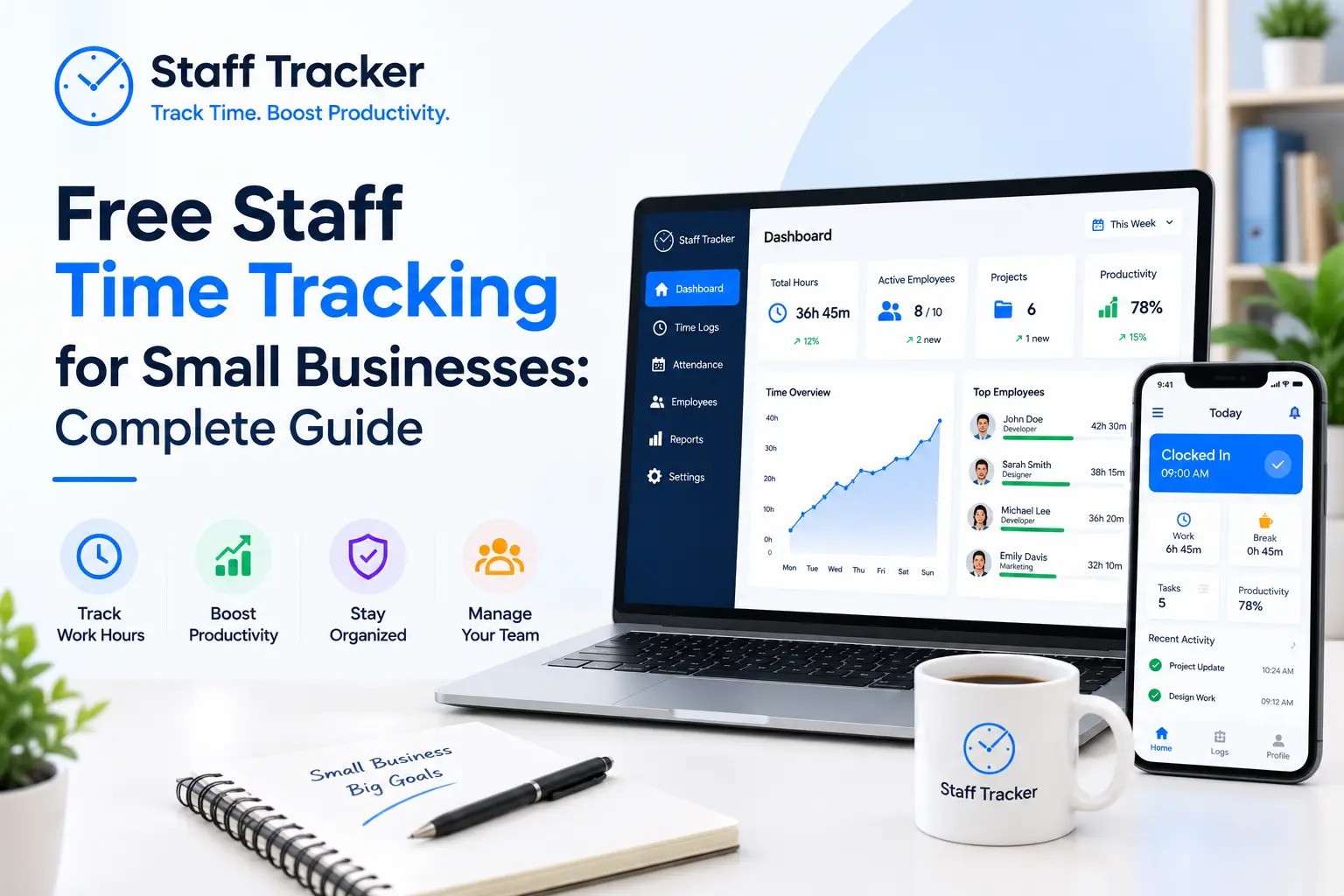
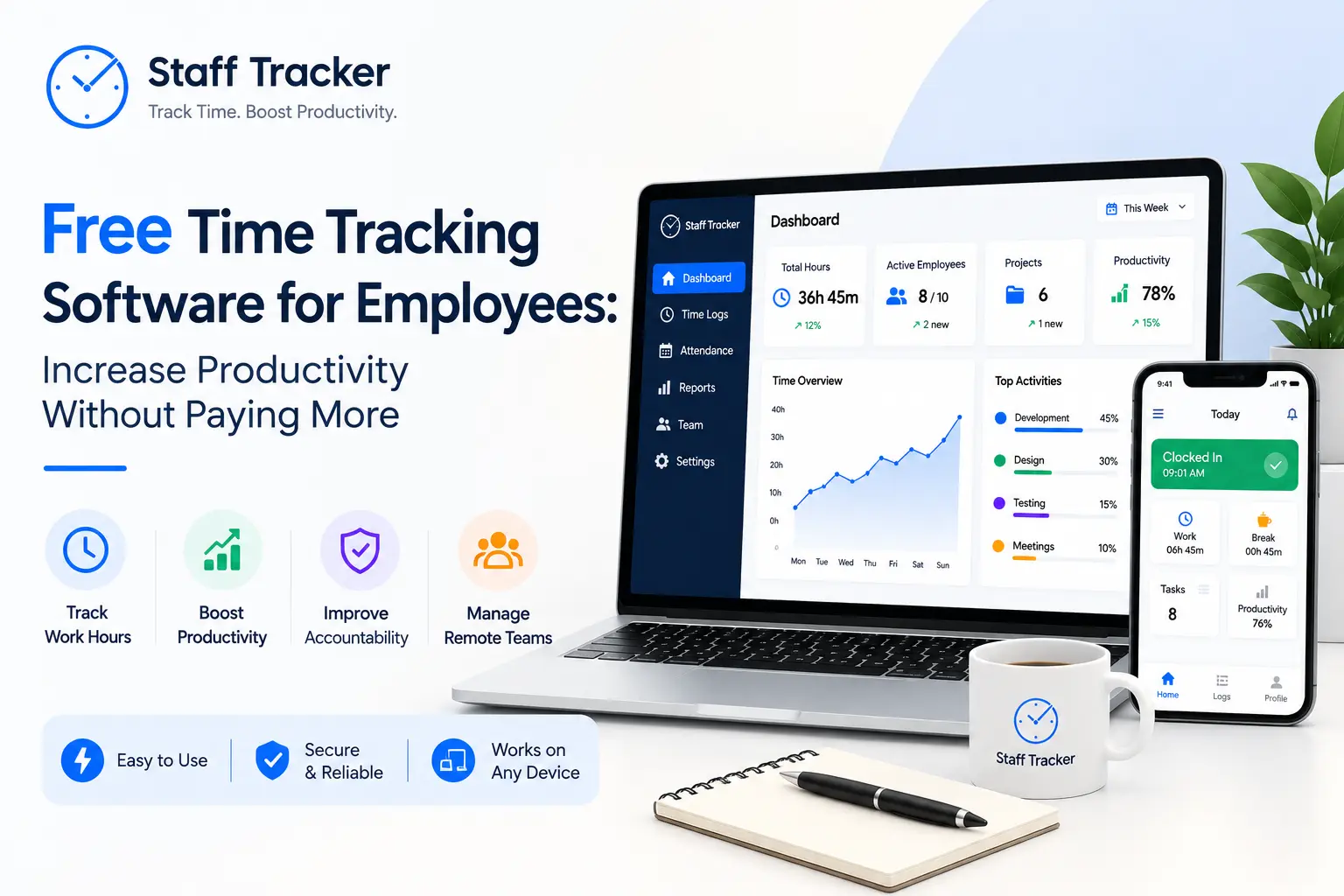
Software for tracking time is a computer solution that records employees' hours of work and attendance, as well as the duration of tasks as well as productivity data. In contrast to traditional spreadsheets and paper timesheets, modern technology collects accurate and real-time information, while making manual work less.
Depending on the program, the business can also monitor idle and active time as well as track attendance, take images (with transparent guidelines) create payroll-ready documents, and evaluate the performance of employees through a central monitor.
In automatizing manual processes, companies gain greater visibility into their daily operations, while also cutting down on errors and savoring precious administrative time.
How Time Tracking Software Works
The majority of time tracking software is run behind the scenes on the desktops of employees' and mobile gadgets. It records work hours automatically as well as records attendance, breaks, and creates precise reports, without requiring employees to fill in timesheets.
Advanced platforms like Staff Tracker also provide features such as:
Automatic time tracking
Attendance management
Employee productivity reports
Browser and application usage tracking
Screenshot monitoring
Idle time detection
Leave management
This lets managers make educated decisions based on current information about their workforce instead of making preconceived notions.
Who Uses Time Tracking Software?
The software for time tracking is useful for companies large and small, as well as across different industries. It assists teams in staying organized, boosts accountability, and aids in better resource planning.
Common users include:
Small-scale companies looking to automatize payroll and attendance: There is a small business that aims to automatize attendance and payroll
Remote and hybrid teams managing distributed employees
Companies in software and information technology track the hours of their project's hours of work
Creative and marketing agencies measure the amount of time that they bill. Time to billable
Customer support teams monitoring productivity
HR departments manage the records of leave and attendance The HR department manages attendance and leave records
Professional services firms improving workforce efficiency
If a company employs more than 1,000 employees, precise time tracking can help reduce the burden of operations and boost overall performance of the business.
Why Businesses Are Investing in Time Tracking Software
As workplaces adapt to changing demands, organizations require more visibility into the time spent in teams. Traditional attendance systems and manual spreadsheets are often prone to causing inaccurate reports, discrepancies in pay, and a lack of insight into employee performance.
Modern companies have invested in time tracker software that allows them to:
Enhance productivity of your workforce with real-time information Real-time information for workers
Reducing payroll error by ensuring accurate time record keeping Time records that are accurate
supports remote as well as hybrid workplaces Support remote and hybrid work environments
Eliminate manual administrative tasks
Transparency and accountability are improved. Increase transparency and accountability
Make better business decisions with the help of the latest workforce data The workforce analytics
Instead of focusing only on observing employees, the latest time tracking software can help businesses find ways to enhance workflows, maximize resources, and create a more productive workplace for everyone.
15 Benefits of Time Tracking Software
The significance of time tracking software is not just in recording the clock-in and clock-out time. Modern software helps companies increase productivity, improve efficiency, and make better choices with real-time information about the workforce. These are the main advantages of time tracking software in working environments of today.
1. Increases Employee Productivity
One of the most significant advantages of using time-tracking software can be the improvement in productivity of employees. With the ability to see the hours of work, employees are more aware of their tasks and their time allocation. This helps them focus better as well as reducing distractions. It also assists teams in completing their tasks more efficiently.
for managers. Reports on productivity highlight patterns and highlight opportunities to improve workflows instead of making the assumption that it is.
2. Improves Time Management
A well-organized time management system is vital to meet deadlines and maintain an appropriate workload. Time tracking software can help employees recognize where their time goes throughout the day, which makes it easier to prioritize important tasks and cut out unnecessary tasks.
As time passes, these data can help teams be more efficient and achieve more in the course of their work.
3. Eliminates Manual Timesheets
Timesheets that are manually created are usually inefficient, time-consuming, and are prone to human errors. Employees could forget to record their hours, or they may enter inaccurate data, leading to errors in payroll and more administrative tasks.
Time tracking records that are automated working hours in real-time reduce paperwork and ensure accuracy in time and payroll reports.
4. Reduces Payroll Errors
Payroll accuracy starts with precise time sheets. Time tracking software calculates automatically working hours breaks, overtime, breaks and attendance, thus reducing the chance of mistakes in payroll.
With payroll-ready reports, HR teams can pay salary faster and reduce disputes arising from incorrect time of work.
5. Enhances Project Management
For companies that work on projects, understanding the amount of time used for each project is essential. Time tracking software can help managers monitor the progress of projects, assign resources effectively, and spot the tasks that require more time than anticipated.
This results in better planning, better budgeting, as well as greater profit.
6. Increases Employee Accountability
Transparent time tracking fosters an environment of accountability that is free from the need for micromanagement. Employees are aware of their working hours, and managers have access to precise performance data whenever they need it.
When expectations are shared clearly, Teams are more likely to remain focused and complete their tasks.
7. Supports Remote and Hybrid Teams
Managing teams with different locations isn't easy without the appropriate tools. Time tracking software allows companies to track the work hours, attendance and productivity irrespective of employees' location.
Features like the ability to access mobile devices, track activity and attendance based on location can aid teams from hybrid and remote locations to remain connected, while allowing the flexibility.
8. Identifies Time-Wasting Activities
Every hour of work can be attributed to productivity. Time tracking software can provide useful insights into the amount of active working hours, idle time and the use of applications, and help businesses find areas of inefficiency.
Instead of being focused on surveillance, businesses could use this data to eliminate bottlenecks, improve workflows, as well as help if required.
9. Simplifies Attendance Management
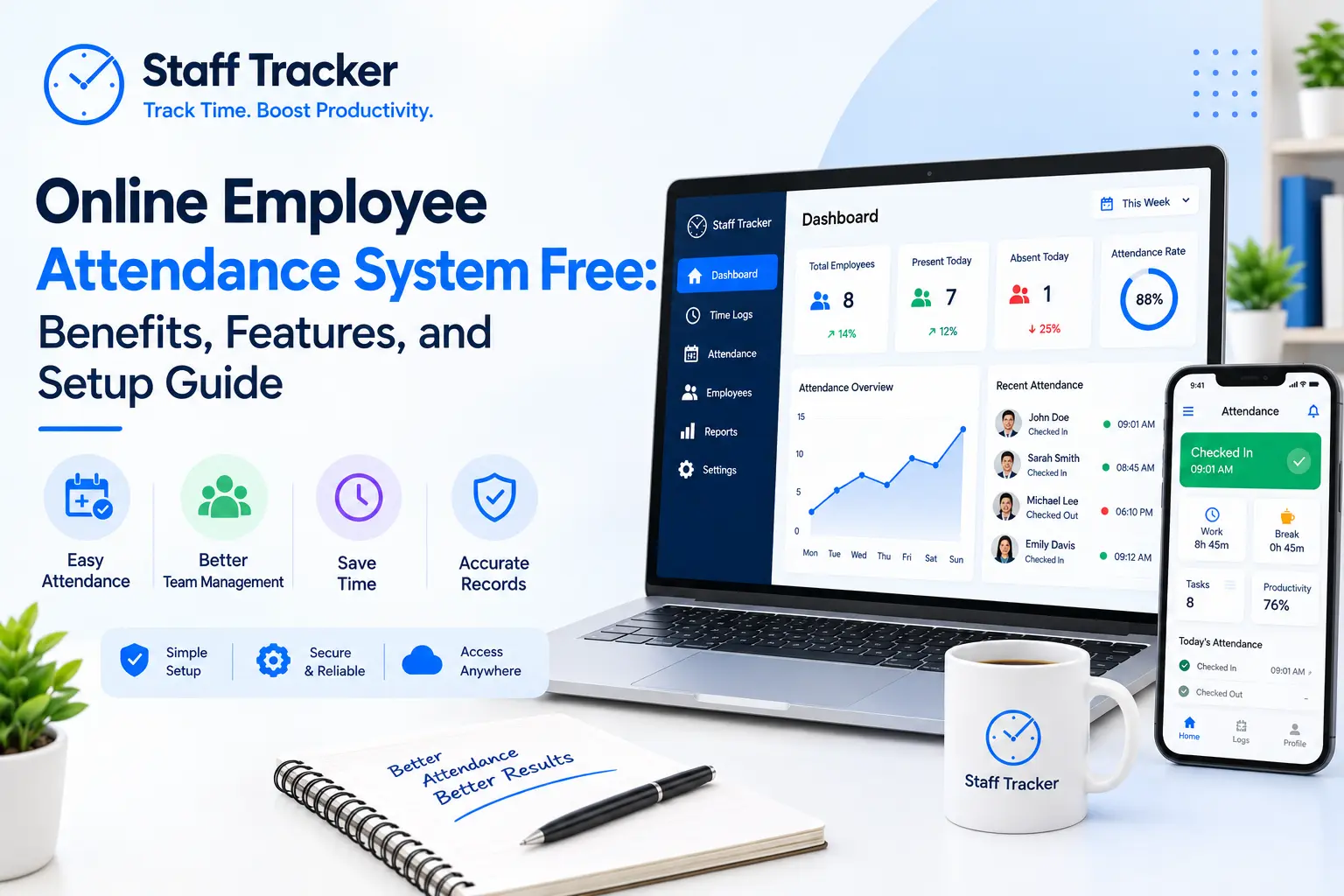
Handling attendance manually becomes more difficult as teams expand. Automated attendance tracking tracks the clock-in and out times of break times, requests for leave and working hours on centralized platforms.
This decreases the administrative burden while increasing the precision of attendance data.
10. Provides Real-Time Workforce Insights
Modern businesses depend on data for making informed decisions. Time tracking software produces comprehensive reports about attendance and productivity, patterns of work, and the utilization of resources.
These data can assist managers in identifying performance trends to balance workloads and enhance overall operational efficiency.
11. Prevents Time Theft
Time theft, including buddy punching, extended breaks or inaccurate time entries, can raise the cost of labor over time. Automated tracking provides clear and reliable documents that allow businesses to minimize these problems without creating unnecessary friction.
This makes sure that employees are paid in a fair way for the time they actually work.
12. Improves Decision-Making
The accuracy of workforce data can help make better business decision-making. Managers can study trends in productivity and identify teams that are performing well and forecast the requirements for staffing and optimize allocation of resources by relying on actual evidence instead of the assumption.
This results in better operational planning as well as better business growth.
13. Supports Compliance and Record Keeping
Numerous industries require businesses to keep accurate employee attendance and working hours records for legal and regulatory reasons. Time tracking software records this information and makes it easy to plan audits as well as ensure compliance with labor laws.
Digital records can also cut down on the amount of paperwork required and make it easier to access.
14. Reduces Operational Costs
Automating the preparation of payroll, attendance, and reporting can reduce the administrative burden placed on the HR as well as management. Employers spend less time fixing manual mistakes, preparing paperwork, and settling payroll disagreements.
In time, the efficiency of these technologies contributes to lower operating costs and increased profit.
15. Helps Businesses Grow with Data
As businesses grow and teams grow, managing them is becoming more difficult. Time tracking software can provide the information needed to manage the workforce and scale operations without fear.
Through understanding the productivity of employees along with trends in attendance, productivity, and the utilization of resources, companies can make educated hiring decisions, increase team performance, and plan for sustainable development.
Key Takeaway
The benefits of using time tracking software go beyond the simple recording of hours worked. From increasing employee productivity and payroll accuracy, to supporting remote teams and delivering real-time data on workforce performance, it can help organizations create a more efficient and transparent workplace.
Solutions such as staff tracker incorporate time tracking, the management of attendance and productivity tracking, employee analytics, and payroll ready reporting. This allows companies to streamline their operations and help employees be at their best.
Benefits for Different Teams + Time Tracking Software vs. Manual Time Tracking
The software for time tracking adds benefits across the entire organization, not just for managers. When it is implemented with clear guidelines with transparency and clarity, the software assists employees to perform more efficiently. It also helps managers make better choices and reduces administrative tasks for HR professionals and business leaders.
Benefits of Time Tracking Software for Different Teams
Benefits for Employees
Many people believe that time tracking software is just used to keep track of their work. However, modern time tracking software was specifically designed to help employees by helping them to be more productive and organized.
Key benefits include:
A better work-life balance: Monitoring working hours can help employees not overwork and maintain healthy schedules.
Accurate pay: Time logs that are automated make sure employees are compensated correctly for their regular hours, overtime, and authorized leave.
Focus: The ability to understand the way time is spent can lead to better planning and prioritization, which reduces distractions.
Visibility to performance: employees may look over their own performance reports and identify areas that could be improved and highlight their achievements during their performance reviews.
If properly used when used in a responsible manner, time tracking encourages transparency and allows employees to perform better, not harder.
Benefits for Managers
Managers require accurate data to effectively lead teams. Instead of relying on guesswork time tracking software gives immediate insights into work efficiency, attendance, and workload.
Some key advantages include:
Check team performance with live dashboards.
Recognize bottlenecks prior to their impact on deadlines for projects.
Assign tasks based on the employee's capacities and availability.
Workloads should be balanced to avoid burnout.
Make informed decisions with the help of productivity reports.
With better transparency into the day-to-day operations Managers can reduce the time they spend tracking their work, and more time assisting team members.
Benefits for HR Teams
HR professionals spend a significant amount of time managing the records of attendance as well as leaving requests and preparing payroll. Time tracking software streamlines some of these tedious procedures, allowing HR departments to focus on more strategic initiatives.
Key benefits include:
Simple attendance and management of leave.
Quicker payroll processing using accurate time-of-work data.
Reduction of mistakes made by hand and paper.
Centralized employee records to facilitate reporting and better compliance.
Better workforce planning by incorporating productivity and attendance trends.
Automation boosts efficiency and reduces the administrative burden for HR departments.
Benefits for Business Owners
Business owners require an understanding of the way resources are employed. Time tracking software gives you real-time information that aids in planning, cost management, and growth of the business.
Business owners can use time tracking data to:
Determine the overall productivity of your workforce.
Reduce the amount of unnecessary labor.
Increase the profitability of your project.
Optimize staffing decisions.
Increase the efficiency of your operations with real-time workforce analytics.
By combining productivity, attendance, and reporting on one system, companies gain the transparency needed to make data-driven choices.
Time Tracking Software vs. Manual Time Tracking
A lot of companies still rely on spreadsheets, paper timesheets, or manually recorded attendance records. While these techniques may work on small-sized teams, they are becoming increasingly difficult to maintain as businesses grow.
Table below outlines the major distinctions:
Manual Time Tracking | Time Tracking Software |
Requires manual time entries | Automatically keeps track of work hours It automatically tracks working hours |
Higher chance of human error Higher risk of human errors | Accurate and real-time data |
Time-consuming payroll preparation | Payroll-ready payroll reports automatically generated automatically. |
Limited visibility into productivity | In-depth insight into attendance and productivity Insights into attendance and productivity |
Difficult to manage remote teams | supports remote, hybrid and on-site workers supports on-site, hybrid, and remote employees |
Paper-based or spreadsheet records | Secure cloud-based data storage |
Limited reporting capabilities | Analytics that are advanced and custom reports Advanced analytics and customizable reports |
Uncertain to determine patterns in productivity It is difficult to identify trends in productivity | Real-time workforce analytics for better decision-making |
As businesses grow, the manual process can become unproductive and vulnerable to mistakes. Making the switch to an automated process will not only cut down on time, but also increase accuracy, transparency, as well as overall efficiency.
Quick Summary
It doesn't matter if you're an employee's HR professional, manager, or a business owner; the advantages of using time tracking software extend far beyond recording working hours. It helps improve collaboration, reduces administrative tasks, increases productivity, and gives useful insights that can help companies grow.
For companies looking to modernize the management of their workforce platforms such as Staff Tracker combine time tracking and attendance management, as well as employee productivity monitoring, and work analytics into one solution that makes it simpler for managers to oversee teams as well as achieve higher business performance.
Essential Features to Look for in Time Tracking Software
There is a few time tracking software that provides the same features. While the most basic tools can track working hours, modern companies require software that can provide useful insights, ease managing workforces, and aid in long-term expansion.
These are key aspects to take into consideration when selecting the best time tracking software:
Automatic Time Tracking
It automatically tracks employee hours of work without the need for manual timesheet entries to reduce errors and save administration hours.
Attendance Management
Keep track of employees' attendance, shifts and breaks overtime, and leave requests on a single dashboard to improve workforce management.
Productivity Reports
Reports that are detailed aid managers in understanding how their time is used, recognize patterns in productivity and help improve efficiency in operations.
Idle Time Detection
Inactivity detection to pinpoint the source of workflow bottlenecks and improve efficiency of employees without using intuition.
Browser & Application Usage Tracking
Get insights into the web sites and applications that employees use during their work hours, to better understand work patterns and the use of resources.
Screenshot Monitoring
Screenshot monitoring is an option that gives additional insight to remote teams, while ensuring the transparency of the company through clearly communicated policy.
Mobile Accessibility
A mobile-friendly platform that allows field and remote workers to keep track of their schedule and time from wherever they are.
Pro Tip: Select software that balances productivity insight with transparency of employees. The aim is to increase productivity, not micromanage your workforce.
How Staff Tracker Helps Businesses Maximize Productivity
Modern workplace management requires more than simply recording employee hours. Staff Tracker is a software that combines smart time tracking with sophisticated workforce analytics to assist businesses in increasing productivity, streamlining processes, and making better choices.
With Staff Tracker, businesses can:
Automatically track employee hours of work.
Keep track of attendance and leave data in all locations.
Review productivity with elaborate reports and graphs.
Monitor the use of applications and browsers to improve workflow efficiency.
Find idle time and increase the allocation of resources.
Prepare payroll-ready statements using precise time information.
Help support hybrid, remote teams and office-based ones using one platform.
Instead of wasting valuable time with manual attendance records or spreadsheets, supervisors have real-time insight into employee performance while employees enjoy transparent and precise tracking of work hours.
Best Practices for Implementing Time Tracking Software
Implementing time tracking software effectively is contingent on the way it's implemented. The following best practices can help increase trust, boost the adoption rate, and boost the effectiveness of the system.
Communicate the Purpose Clearly
Explain that time tracking is designed to boost productivity, simplify payroll processes, and improve workflows. It is not intended to keep track of employees unnecessarily.
Set Transparent Policies
Define clearly the manner in which breaks, working hours and attendance information will be monitored and utilized within the company.
Use Data to Improve, Not Punish
Time tracking information will help identify processes that can be improved with potential training opportunities, as well as work-load imbalances instead of only focusing on monitoring employee performance.
Review Reports Regularly
Examine productivity and attendance reports regularly to detect patterns, enhance planning, and make better company decisions.
Choose a Scalable Solution
As your company expands the time tracking software must expand along with it. Choose a system that can accommodate the expansion of teams, multiple sites, and changing workforce requirements.
Frequently Asked Questions
What's the advantages of using Time tracking programs?
Software for tracking time assists companies improve the efficiency of their employees. Automate attendance management, minimize payroll errors, track the progress of projects, and make data-driven workforce decisions.
Is time tracking software suitable for small businesses?
Yes. Small-scale businesses can get the benefit of automated attendance management, precise payroll calculations, increased productivity, and less administrative tasks which allow teams to concentrate on the growth of their business.
Does time tracking software improve employee productivity?
Yes. Through providing insight into the way work hours are used, employees can plan their tasks more efficiently, while managers can gain insight to improve workflow and eliminate inefficiencies.
Can time tracking software support remote and hybrid teams?
Absolutely. Modern time tracking software allows firms to track the work hours, attendance productivity, as well as project performance regardless of the location of employees.
What are the features I look for in a time monitoring program?
Search for features like automatic time tracking as well as productivity reports, attendance management as well as idle time detection applications and browser tracking pay-ready payroll reports, and mobility accessibility.
Is employee time tracking legal?
In many areas, tracking employee time is permitted when companies follow local laws regarding labor, communicate the policies for monitoring clearly and are respectful of the privacy of employees. Businesses should ensure that they are transparent and adhere to applicable laws.
Key Takeaways
Time tracking software can do much more than just record employees' work hours.
It increases productivity and time management, payroll accuracy, and workforce scheduling.
Automated reporting reduces time spent by the administrator and minimizes manual mistakes.
The insights from the workforce help managers make educated and data-driven decisions.
Teams that are hybrid or remote have better transparency and accountability.
The right choice can aid in long-term growth for businesses and improve operational efficiency.
Conclusion
As companies continue to adopt the concept of hybrid work, distributed teams and data-driven decision-making, investing in the best time tracking software is now seen as a strategic advantage instead of an essential requirement.
The advantages of using time tracking software can be found at every level of an organization. From helping employees efficiently manage their time and enabling HR teams to manage attendance and payroll as well as providing managers with real-time insights into their workforce Modern time tracking systems make for a more productive clear, and efficient workplace.
But getting these benefits is contingent on choosing software that goes beyond simple time-logging. A comprehensive solution should include time management and productivity analytics, as well as data collection, and insight into the workforce within a single, intuitive platform.
Staff Tracker was designed to address these ever-changing requirements of business. With features such as automated time tracking as well as productivity monitoring, attendance management as well as browser and application tracking and idle time detection and payroll-ready reporting, it helps businesses streamline the management of their workforce while also making better, more decision-based on data.
No matter if you're managing an office team, remote workforce or a hybrid workplace using the appropriate time tracking software will increase the efficiency of your operations, decrease the administrative burden, and set up your company for long-term growth.
Ready to improve workforce productivity?
Find out how Staff Tracker can assist you in automating time tracking, simplifying attendance management, and getting real-time insights into your workforce. Explore the platform now and start the journey towards a more productive and efficient workplace.
Read Also:
Written by the Staff Tracker Team
This content was authored by the Staff Tracker team who has lots of experience managing the workforce as well as tracking time and attendance and employing HR Technology. Staff Tracker Creates content that is practical and speaks to the pain businesses have with optimizing workforce operations and improving productivity in the business.
 16-09-2026