- By Admin
- 24 Sep, 2026
- 75 Reading
Knowing your employee's account login status is of little help when managing employees. Businesses need insights into employee's work and activities outside of the application's status. This includes the work and activity status of employees across different projects and where field employees are deployed.
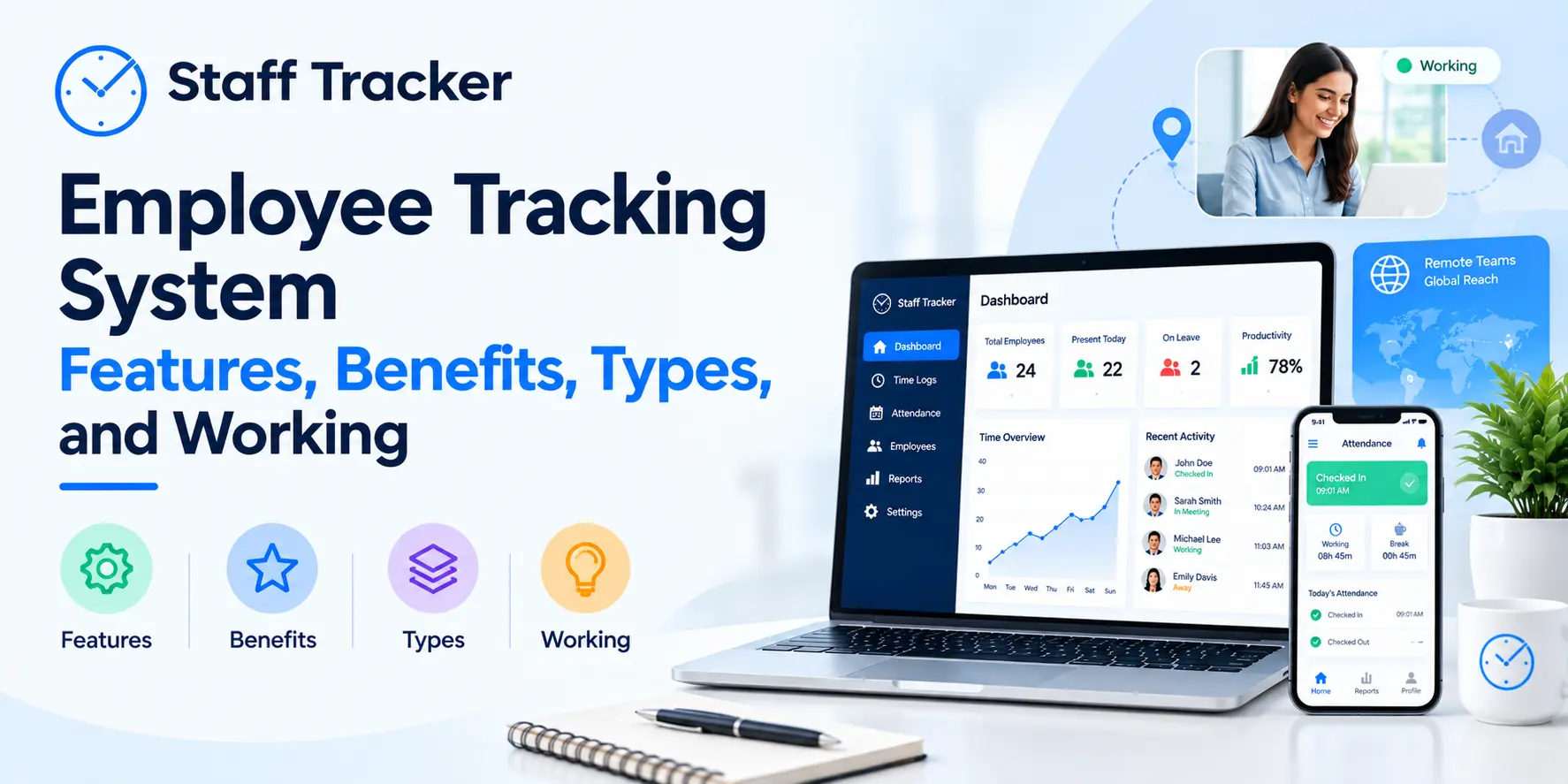
An employee tracking system is a software system that helps track and generate reports on employee's work activities and status outside of the application. This includes, but is not limited to, working hours and attendance, activity status on different applications and websites, productivity, tasks, and location. The system can be configured to manage office, remote, and field employees.
Manual timesheets and attendance records cannot help but provide a mere glimpse into the workforce. Employee tracking systems provide a unified and integrated solution for workforce management.
What is an Employee Tracking System?
An employee tracking system is a unified framework to manage the employee workforce and its activities. The framework provides insights into employee work activities and assists managers in making optimal workforce decisions.
The framework achieves this by collecting and analyzing data on employee work activities. The types of work activities and data collected largely depend on the configuration of the system. Some work activities may include, but are not limited to, productivity, work and break attendance, application and website usage, screenshots, tasks and project work, calls, location and movement. The system generates work activity reports based on the configuration.
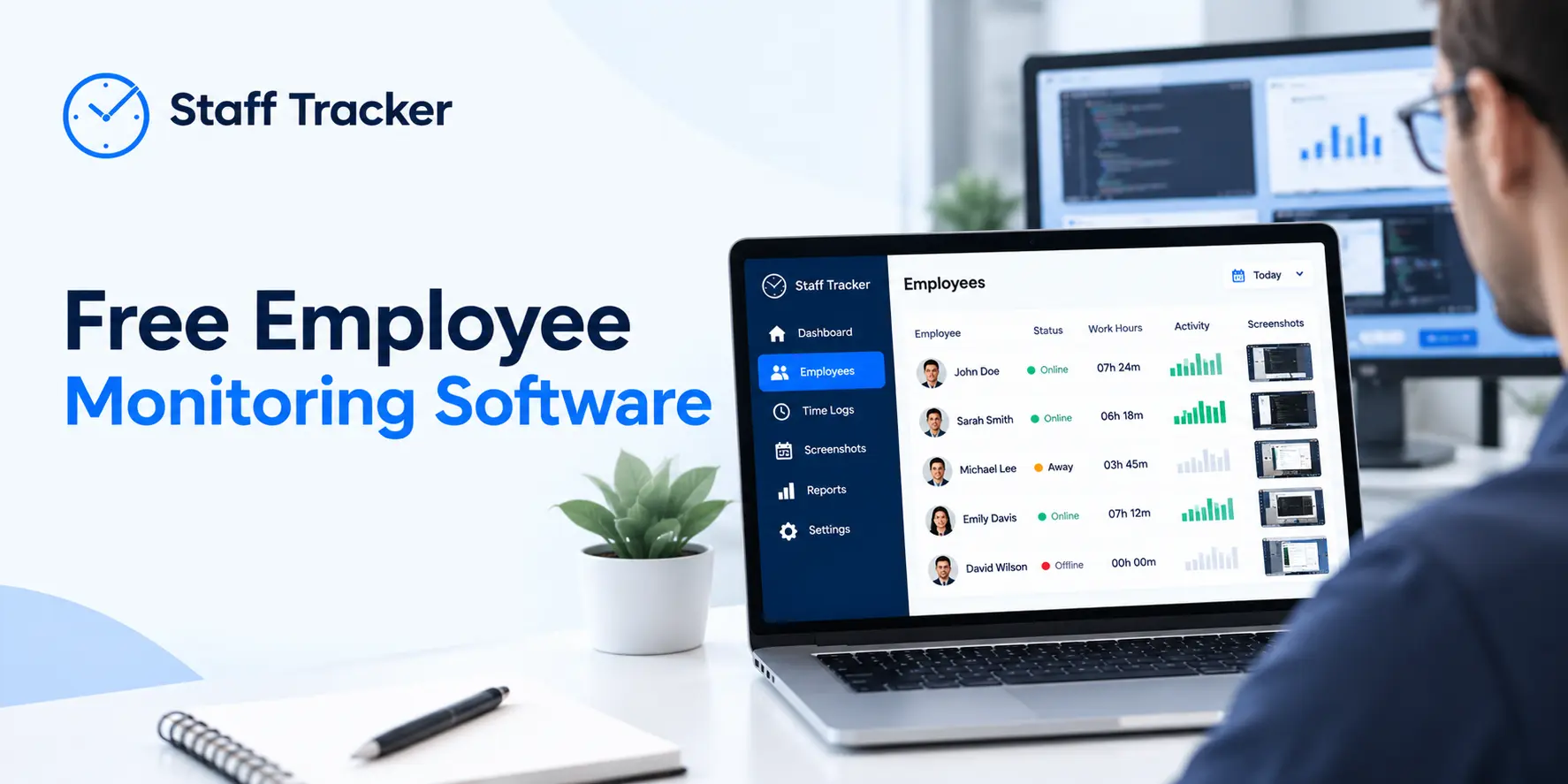
Staff Tracker is a platform that provides an integrated employee tracking and workforce management solution through PC and employee location tracking, call logging, and other work activities.
What is an Employee Tracking System?
An employee tracking system is a software service that enables a business to track employee activity by using software installed on employee devices.
1. Employee Tracking Software Installation
Upon subscribing to the tracking software, the business creates an account and receives access to software applications that they can deploy on employee devices via the internet or by installing them on the devices.
Staff Tracker, for example, states that employee device monitoring is achieved by signing up, downloading, and installing their software.
2. Employee Tracking
The software captures employee activity by, for example, recording the time employees spend on various activities, aiding in attendance taking, capturing employee activity on various applications, employee website usage, and taking screenshots, among other things.
3. Data Organization
The captured data is organized in various formats, including tables and graphs.
4. Data Analysis
Management is required to determine the best way to utilize the work resources and improve employee productivity. The software can be used to determine why the workforce is not productive or identify areas of workflow blockage.
Although the software generates a lot of data concerning employee activity, the primary objective of using the employee tracking software is achieved when the activity data is utilized to better plan and structure work activities to improve business performance.
Different Types of Employee Tracking Systems
Various types of software can be used to track employee activities. These types of software mainly vary in terms of the activities that they can track.
Employee Activity Tracking
These types of software are designed to track employee activities on business devices and include application and website activity and usage, among others.
Productivity-related systems
Productivity-related systems focus on several different areas, including how employees utilize their time, tools, and equipment, and help streamline and improve business processes.
These systems can track employee activity and identify areas that reduce employee productivity.
Work Management Systems
As an extension of productivity systems, work management systems integrate several different workplace activities into a single, unified system. These activities can include time and attendance, location, and productivity.
These systems can be extremely useful in tracking and managing employees who work remotely and/or in the field.
When choosing an employee tracking system
When choosing an employee tracking system, it is important to assess the features that are most important to your business.
Digital Time Tracking
Time can be tracked and recorded by an employee tracking system and help employees and management gain insight into how employees spend their time and improve time management.
Many systems integrate features to help manage and track employee attendance and time off.
Employee Tracking Systems and Employee Privacy
If management chooses to implement an employee tracking system, they should design and implement policies to help protect employee rights and privacy.
These policies should define when and where management is authorized to implement employee tracking. Employees should be notified if their work activity and/or computer usage are going to be tracked. Management should clearly communicate to employees about the purpose of employee tracking and how long management will track employee activity. Employees should be notified if their work activity is monitored, and Management should limit the use of tracking software that captures screenshots and/or recordings.

Analyze Employee Work Activity
Tracking employee activity helps companies figure out the ins and outs of their workers’ behaviors about the technology that they use and how they use it to perform their work.
By breaking up an employee’s day into active and inactive time, management can see work patterns and trends.
Raw data on employee activity can give management insights on employee productivity. However, management should interpret this data in the right way. Someone with low activity data for the day may still have been productive and finished work assignments for the day.
Employee Route Tracking
Staff Tracker’s Geo Tracker provides management with real-time location data on employees. Geo Tracker can also provide data on employee routes and employee mileage.
Track Work Activity
Management can gain insights on employee productivity when they integrate task management with Staff Tracker. Task Management gives management data on employee productivity with respect to the work assignments that they completed.
Make Data-Driven Decisions
Management can get raw data on employee productivity, but they can also get reports on productivity. Staff Tracker gives its users reports and data on productivity for a period, and it gives them employee performance data for a particular month.
Employee Call Tracking
If management wants to further analyze employee productivity, they can have employees log into their work calls. Staff Tracker can also provide employees with call logging and analysis.
Automated Attendance
Automated attendance data gives management insights on employee work attendance and patterns.
Flexible Employee Management
Manager-level employee work activity tracking can help address concerns about employee work activity, especially if employees are remote or not physically managed.
Staff Tracker helps manage remote, hybrid, and on-site employees, including location tracking.
Custom Employee Tracking
Employee tracking features can vary to help remotely manage employees who work in different business locations or work environments.
Employee Tracking Systems and Employee Privacy
Employee monitoring must be transparent and done on a need-to-know basis.
Employees must be informed about:
-Data collection
-Purpose of data collection
-When data is collected
-Who accesses the data
-How long data is retained
-How the data will be utilized
Cisco states that from an employee relations standpoint, it is best to be as transparent as possible. However, Cisco advises seeking legal counsel to determine what, if any, restrictions exist regarding employee monitoring.
Many of the newest employee monitoring solutions provide the capability to define roles and determine what type of monitoring (if any) is to be implemented.
It is recommended that companies wishing to implement employee monitoring solutions establish a policy regarding employee monitoring and seek legal counsel.
Is It Legal to Monitor Employees?
It depends. Several factors must be considered, including the location of the business, what data is collected, how it is collected, what devices are monitored, and how the data is used.
It is best to consult legal counsel.
When thinking about employee monitoring, consider the following:
-What restrictions exist regarding the collection of employee data?
-What laws protect employee data?
-Are employees notified and/or do they provide consent regarding the monitoring?
-Is the employee's personal device monitored?
-Is location data monitored?
-What are the constraints on the use of the data?
-What controls restrict access to the data?
-What are the data retention policies?
-Do the policies restrict the monitoring of employee data across national borders?
Employees should be monitored only if legally permissible.
What is the primary issue your business is attempting to solve?
Would employee tracking help solve that issue?
Do we manage field employees?
We focus on task management in this evaluation.
Do we need end-to-end project management?
We look for tools that help manage staff activities and tasks.
Do we need employee analytics?
We consider tools that provide organization and analysis of workplace activities.
Other factors to be considered include:
Ease of use
Support for desktop and mobile
Reporting
Data loss
User and facility controls
Data privacy
Data export
Limits of use
Fees
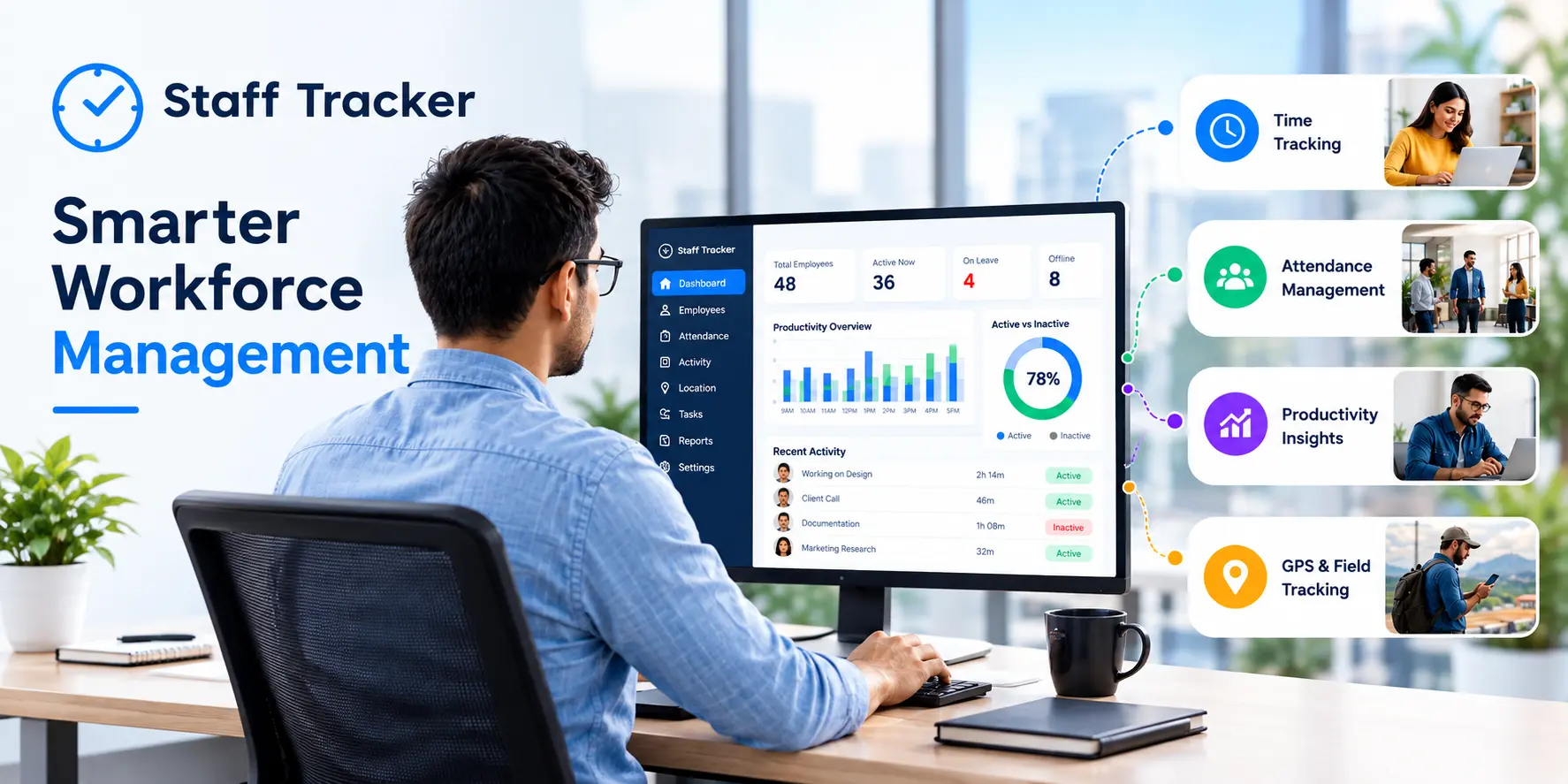
Staff Tracker offers its service through desktop and mobile apps, and the web, to provide employee attendance, location, activity, and task management. It also provides automatic screenshots and workplace browser/application activity.
An Employee Tracking System (ETS)
An Employee Tracking System (ETS) facilitates digital record-keeping, activity tracking, and synchronizes workforce schedules and activities. It provides a centralized command and control function. Real-time tracking can be scheduled. An ETS can synchronize workforce activities and resources.
Automated systems can be used for workforce management. Manual systems may be adequate for very small workforces.
Don't focus on the monthly cost
Don't focus on the monthly cost when evaluating employee tracking software. Consider other expenses such as the time it takes for your IT staff to set up and integrate the software, training for your employees, and the support costs if the software doesn't meet your needs.
Also, consider whether tracking your employees is really necessary. Below are some common mistakes organizations make when employing tracking software.
Tracking Too Much
Not every piece of information helps you make a better business decision. Collecting excessive data may lead to problems with your employees’ trust and confidence.
Measuring Activity, Not Results
Tracking how busy your employees are will not help you evaluate how effectively they are working.
Four Other Employee Tracking Mistakes
1. Not Being Transparent
2. Failing to Protect Employee Privacy
3. Choosing Unnecessary Features
4. Assuming Tracking = Micromanaging
Employee tracking software
Employee tracking software can help you automate tracking your employees. These systems can help you optimize your business operations. To answer some common queries, we have outlined the essentials of employee tracking software.
Can employee tracking software be used to track remote employees?
Yes, employee tracking software can be used to track remote employees. Staff Tracker has stated that their software is to be used with remote, hybrid, and onsite employees.
Can employee tracking improve employees’ productivity?
Employee tracking can help employees’ organizations gain visibility into employees’ work activities and potentially help in identifying employee workload and/or help uncover inefficiencies and bottlenecks in the work process. Increasing employees’ productivity is dependent on several other variables besides using employee tracking software.
What is the difference between employee monitoring and employee tracking?
Although employee monitoring and employee tracking are similar, they may have differences. Employee tracking focuses on employee work activities, and employee monitoring may include other activities that employees may be doing.
Is employee tracking legal?
Employee tracking may be legal in some locations, while it may be illegal in other locations. Before implementing employee tracking, a company should consult an attorney to review company policies.
What should I take into account when selecting an employee tracking system?
First, determine what you need to track. This may include employee location, or it may include what applications employees use, projects, tasks, or employee productivity and/or attendance.
Compare features of each system with what your company needs. Also take into account the system’s pricing, usability, and customer support.
Final Thoughts
An employee tracking system offers the opportunity to understand when, where, and how work is done within an organization. It also helps identify potential optimization areas in business processes.
The goal is not to amass as much employee data as possible. The ideal goal is to collect employee data that resonates most with the goals of the organization and helps in refining business processes.
Organizations with dispersed workforce compositions (remote, field, and office) can use Staff Tracker to manage their workforce through a unified platform that integrates time and attendance, productivity, task and project management, and employee surveillance features.
Effective two-way integration of technology and people's processes helps optimize and evolve the way work is done in an organization.
Written by the Staff Tracker Team
This content was authored by the Staff Tracker team, who have lots of experience managing the workforce as well as tracking time and attendance and employing HR Technology. Staff Tracker creates content that is practical and speaks to the pain businesses have with optimizing workforce operations and improving productivity in the business.
 01-10-2026