- By Admin
- 24 Dec, 2025
- 473 Reading
The tech sector has been the most innovative industry, and the emergence of remote working has moved it to the new plane of operations. The current software companies, IT service providers, digital agencies, SaaS teams, and engineering departments have now become heavily dependent on distributed workforces, which are collaborating across cities, time zones and even countries.
Although remote work has simplified the hiring process and expanded the pool of talent worldwide, it has also posed problems with regard to productivity monitoring, workflow coordination, communication trends and general responsibility. This is where sophisticated employee tracker software for remote teams turns out to be a vital constituent of the current technology functions.
Remote environments require real-time understanding of the progress of tasks, their use, level of performance, and the overall direction of the day-to-day operations. In contrast to the classical office arrangements, managers are not able to go to a desk, see the delay in workflow and give immediate instructions.
Remote technology staff operate via screens, electronic tools, code editors, databases and project dashboards - which means that companies have to implement software that offers clearness without impeding creativity or confidence. An effective tracking mechanism will make sure that the rate of productivity is maintained and that groups will keep producing to the expected levels required in the tech arena.
Why Remote Tech Teams Need More Than Just Communication Tools
Project management software such as Jira, Trello, or Asana, and communication software such as Slack, Teams, or Zoom are already relied on by most tech companies. These sites assist teams to remain in touch, yet, they do not represent the actual way that employees are utilizing their labor hours.
They do not exhibit productivity trends, activity involvement, bottlenecks, underutilized time or interruptions in the workflow. This is where employee tracker software for remote teams comes in. It succeeds in the gap between the real time work and the actual results.
Some of the challenges that remote workflows tend to introduce include time zone differences, work habits, asynchronous responses and non-noticeable distractions. In technological settings, where time constraints are severe and project cycles require strict sequencing coding, testing, debugging, designing, deploying, etc. the absence of visibility can paralyze a whole group.
A tracker will provide managers with the chance to know the progress of every member without sending them constant messages or making unnecessary check-ins. This decreases stress among employees and increases concentration.
Real-Time Visibility Improves Productivity and Removes Guesswork
Among the greatest benefits of the introduction of employee tracker software for remote teams, it is possible to comprehend, trace, and enhance productivity in real time. Managers no longer have to make assumptions or wait till the end of the day to know whether or not the work loads are balanced or the deadlines are met.
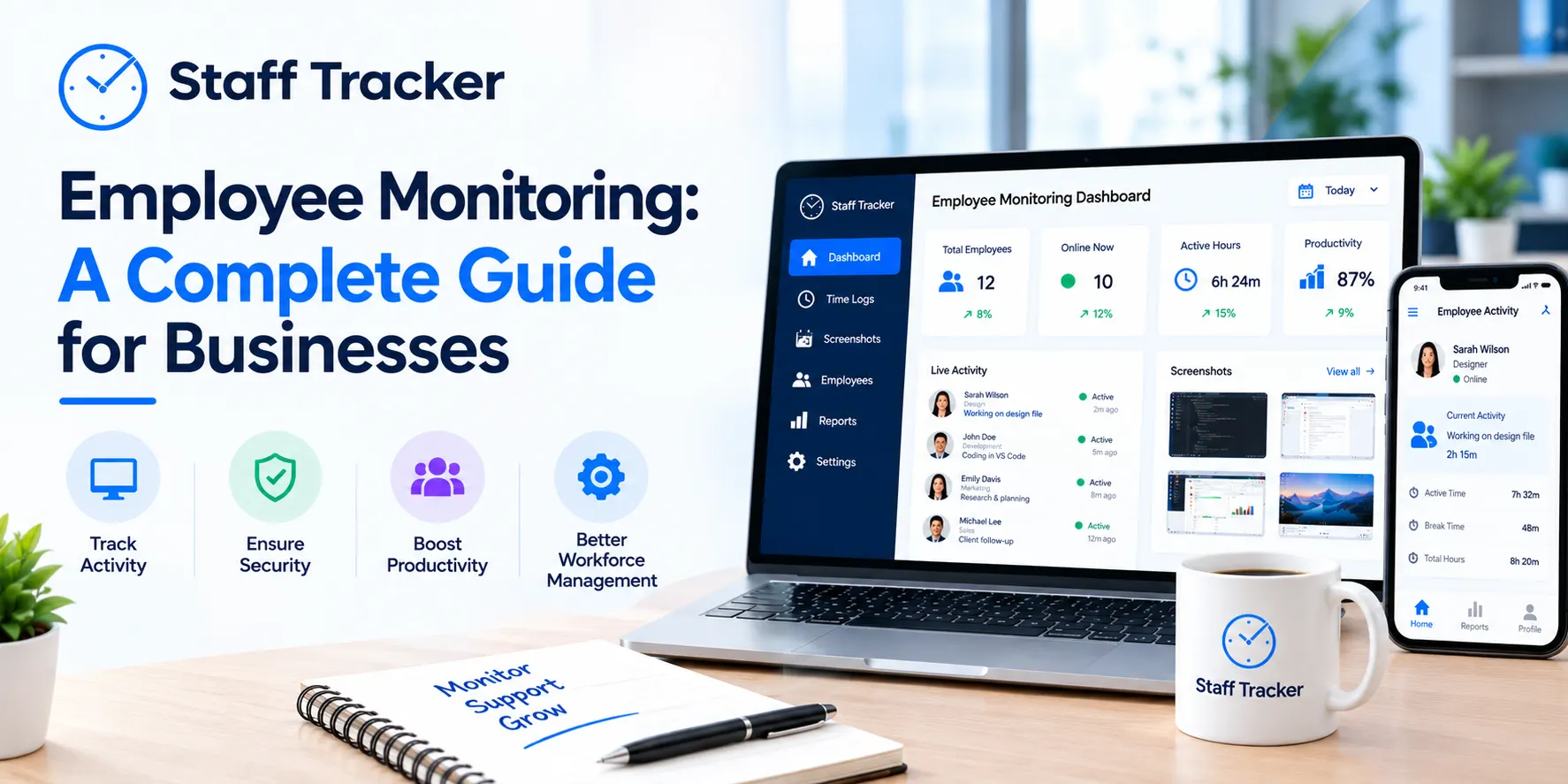
Live visibility assists in detecting challenges in time. When a developer cannot resolve a problem due to excessively long time, the problem can be identified by taking screenshots, tracking the activities, and capturing data on the use of each app before it turns into a significant delay.
The same applies in cases where a QA team member wastes time in using irrelevant applications; the system will point out the pattern to allow managers to respond in a positive manner. In remote configurations, time theft or accidental inefficiency are usually unnoticed. Tracking allows the tasks to go at a consistent speed and performance to be on track.
Employees also benefit from this transparency. Having their work properly recorded, they will not necessarily have to defend their productivity and still have to discuss the delays in the work performance over and over again. The software is objective, and it minimizes miscommunication and cultivates trust in a team.
Enhanced Collaboration Through Clear Workflow Insights
The technology sector is heavily collaborative, which means that developers, designers, analysts, testers, and product managers should collaborate to ensure that projects are completed successfully. Remote work tends to break such smooth interactions. As individuals work at various places, communication or lack of clarity in the current progression of the task can lead to delays in the project.
An employee tracker software for remote teams can be used to preserve collaboration by providing an insight into the flow of work throughout a team. Managers are able to know when members are working, when they are on and when they are waiting long. This facilitates planning of meetings, the delegation of work and task synchronization.
Managers find it easier to coordinate without disturbing team members because instead of calling on status checks, they get the pictures and analysis information, thus can easily see.
In the case of tech companies with complex projects that have interdependent tasks this type of transparency tremendously decreases the number of bottlenecks. It makes sure that dependencies among team members such as frontend developers waiting on backend APIs are dealt with with precision and consciousness.
Better Workload Distribution for High-Performing Tech Teams
The problem of uneven workload distribution is one of the most prevalent in distant technology teams. Certain workers tend to take the burden of high priority work and others get a lesser workload. In the long run, this may cause burnout, poor work quality or lack of morale.
Having an employee tracker software for remote teams means that the managers would be able to view the actual activity levels, and the time spent by the employees on performing each activity. This assists in finding out trends of overworking or underworking. Check-ins are not done verbally but as a result of actual task engagement.
Managers can have a better allocation of duties when they know where work imbalances occur. This does not only enhance the performance of the teams but it also makes sure that not a single employee feels overwhelmed and unappreciated.
Another reason why tech teams work well is that all members feel appreciated and workloads are not overwhelming. This balance is supported by the software because it offers data that assists the leaders to plan in a realistic way.
Strengthening Accountability Without Micromanagement
A misperception of the monitoring tools is that they promote micromanagement. As a matter of fact, the optimal employee tracker software for remote teams has the contrary effect. It allows minimizing the need of constant supervision and releases the employees of unnecessary check-ins.
The fact that the activity levels, timestamps, and work patterns are automatically tracked allows the managers and the employees to work with increased trust in each other.
Responsibility is natural and not artificial. Employees are aware that their work is being correctly monitored and managers are aware that they have valid information to inform them about performance. This will remove misconceptions that are likely to occur in distant environments, with less visibility. The software is not pressuring, but clear.
The way the data is used is what is really important. Employees feel safe, honored and inspired when firms use monitoring as an aide tool, and not as a punitive one. The methods of staff Tracker in monitoring is not surveillance, but to increase productivity, clarity in workflow and efficiency in the long term.
Improved Project Planning Through Data-Driven Decisions
Technological projects can have a series of steps, rigid timeframes, quality assurance and continuous modifications. Remote teams should be able to strategize in order to make sure that every step of the process including initial coding, testing, deployment and maintenance are completed within the required time.
With an employee tracker software for remote teams, project managers gain access to precise data that helps them make more informed decisions.
They will be able to understand the average length of every stage, who the team members are most productive in certain respects, and where the delays tend to happen. This assists in establishing better timelines in the future projects.
Managers develop plans that have the support of actual productivity trends, instead of estimating them based on assumptions. This results in improved delivery predictability, improved reliability in promises to customers, and the ease of work within the company.
To tech firms that have to handle a large number of clients or operate in stressful settings, this kind of insight will be a competitive edge. Evidence-based decision-making lowers risk and enhances the overall performance.
Supporting Employee Well-Being in Remote Tech Environments
The advantages of remote work are numerous flexibility, comfort, and no commute, but there are other negative effects that are not easily noticeable: isolation, blurred boundaries, and exhaustion. Managers can have trouble detecting burnout or overload when the workers work at home. An employee tracker software for remote teams can be used to overcome this problem by demonstrating real working patterns.
When one of the team members is consistently showing up late, making less breaks, or spending a lot of time on the screen, the data will indicate that something needs to be done. Managers can secretly check-in, reassign tasks or promote healthier schedules. Monitoring does not only focus on productivity, but it is also a sign of employee well-being at an early stage.
The software makes remote working a healthier and more sustainable setting by assisting managers to identify symptoms of burnout at an early stage. Technology firms that focus on well-being are associated with increased retention rates, increased performance, and team morale.
Maintaining Security and Preventing Operational Risks
The tech industry deals with sensitive information, source code, client information, internal documentation, user data, and others. Telecommuting poses the danger of unauthorized access, data leakages, or security breach. When the employees operate under various machines and different networks, the accessibility of business resources is critical.
An employee tracker software for remote teams is a level of protection since it displays what applications are utilized, what websites are accessed, and how work devices are managed. It assists in making sure that the rules and regulations of the company are adhered to and that no secret resources are lost.
Managers will be able to see into the dangerous actions like using non-approved tools, well before it becomes a problem.
The type of security monitoring is especially applicable to a company that either is required to comply with standards or safeguard intellectual property. Through Staff Tracker, companies are transparent and in control without limiting their operational freedom.
The Bottom Line
Remote work is here to stay, especially in the tech industry where digital work is the backbone of everyday operations. An employee tracker software for remote teams is important in ensuring that the distributed teams are productive, connected and aligned to the company goals.
The utility of such software is not only the ability to monitor but the ability to explain workflows and enhance cooperation, reinforce planning, and develop responsible and balanced working conditions.
Teams in the tech environment are able to flourish in the presence of clarity, structure, and support. Surveillance systems such as Staff Tracker can give the visibility and insights to achieve that and the companies can continue working at high performance even when the teams are miles apart. Remote working is made simpler, streamlined, and productive with the support of the tools that are informed with the dynamics of the modern tech teams.
Also Read, The Role of Employee Monitoring in Remote Team Collaboration
 09-10-2026