- By Admin
- 19 Feb, 2026
- 583 Reading
In contemporary organizations, performance management has evolved. The old systems of review that are based on periodic reviews or retrospective reportage are no longer effective in the dynamic workplaces. Today, managers require real time insight into team performance, where time is being used and where there is room to streamline the processes without interfering with productivity. This has put real time performance management to the workforce strategy centre stage.
Real-time performance management is based on the emphasis of ongoing insights in lieu of late analysis. It helps managers to monitor work trends as they occur, act proactively to issues, and guide employees in a timely manner. Simultaneously, it, in an intelligent manner, enhances commitment among employees by establishing clarity, fairness and transparency in expectations.
Staff Tracker will help in this new way of doing business by providing a full-fledged staff tracking system that gives practical information on team performance. With time tracking, screenshot monitoring, desktop activity monitoring, and location visibility associated with the real-time monitoring capabilities, Staff Tracker will enable the managers to streamline the workflows and empower their employees to work even more efficiently within a well-organized and responsible work setting.
Understanding Real-Time Performance Management in Today’s Workplace
The concept of real-time performance management is founded on the premise that the understanding of performance is not weeks, or months afterward but the real-time performance. Work patterns may vary on a daily basis in mobile working environments, be it an office based team, remote team or field based team. In the absence of real-time visibility, managers are usually left to use assumptions, unfinished reports, or slow responses.
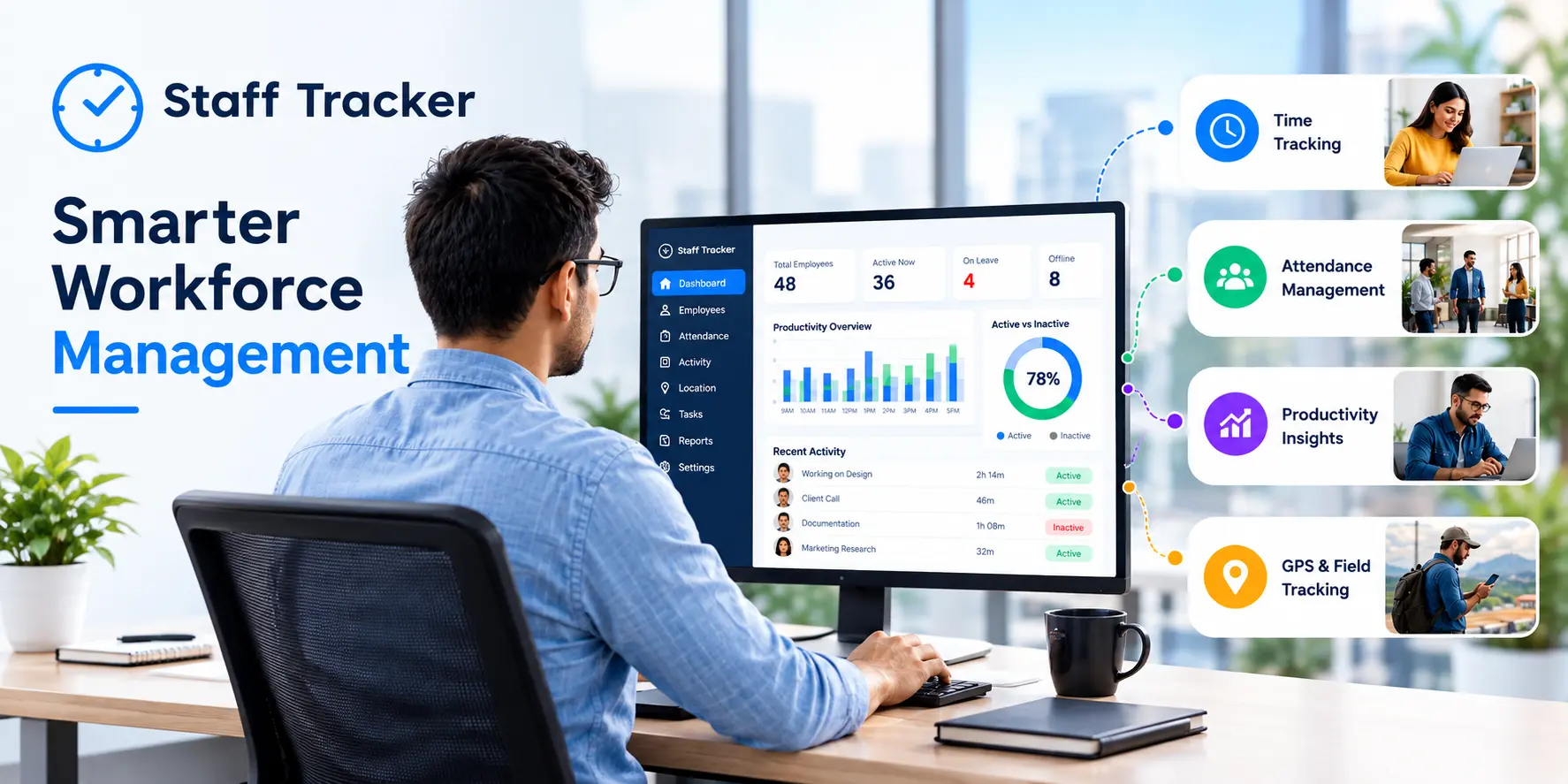
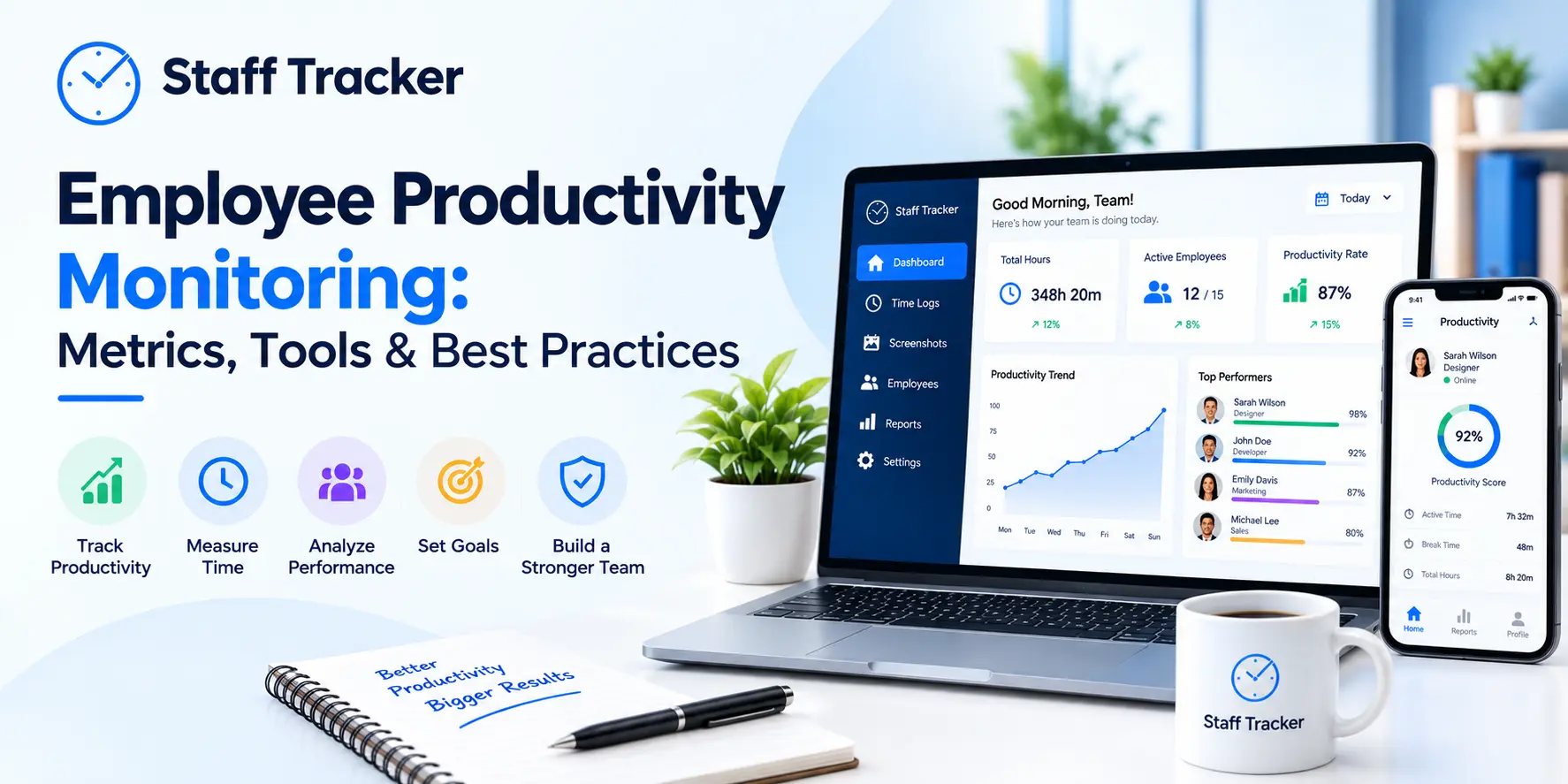
Staff Tracker allows real time performance management due to the constant presence of the data concerning the activity of the employees, time utilization, and execution of the tasks. This enables the managers to know the way work is going on during the day as opposed to getting to know at the end of the week. Performance insights can be made instant, and the management decisions will be more precise and reactive.
This is the best practice not only for the leadership but also for the employees. The managers also enjoy the advantages of clarity and the employees experience a better understanding of expectations and objective assessment on solid work data as opposed to the subjective perceptions.
How Continuous Visibility Improves Employee Engagement
Engaging employees is successful in the workplace where both the expectations and the effort are fairly rewarded. Workers can feel underrated or misinterpreted when the process of tracking performance is not done in a consistent and transparent manner. The real time performance management fills this gap by making the work visible and quantifiable.
The employee tracking tool, Staff Tracker, facilitates interaction through clear monitoring of work hours, use of the application, and patterns of activity. The employees are assured that their actions are accurately documented and this ensures that there is less uncertainty concerning the topic of performance. This transparency would promote trust and accountability when it comes to real time performance management.
Employees will be better placed to remain focused and motivated when they know how their input to the organization will contribute to the overall productivity. The only way to engage people is not to pressurize them but to make it clear and well organized.
Time Tracking as the Backbone of Real-Time Performance Insights
One of the most useful organizational resources is time. It is necessary to understand its expenditure to control productivity and other engagements. The time tracking functional package of Staff Tracker enables managers to properly track the working hours and the duties of employees as well as project timing.
This real time performance management revolves around this time visibility which is continuous. Managers are able to view the progress of work in real time as opposed to using manual timesheets or having to retrospectively report. This allows quicker adaptations to workloads and schedules such that teams would not be overweight or underweight.
In the case of employees, precise time tracking introduces the process of manual reporting to the minimum and makes sure that the efforts of the employees are objectively expressed. This will help create a more equal and interesting working place.
Screenshot Monitoring for Contextual Performance Understanding
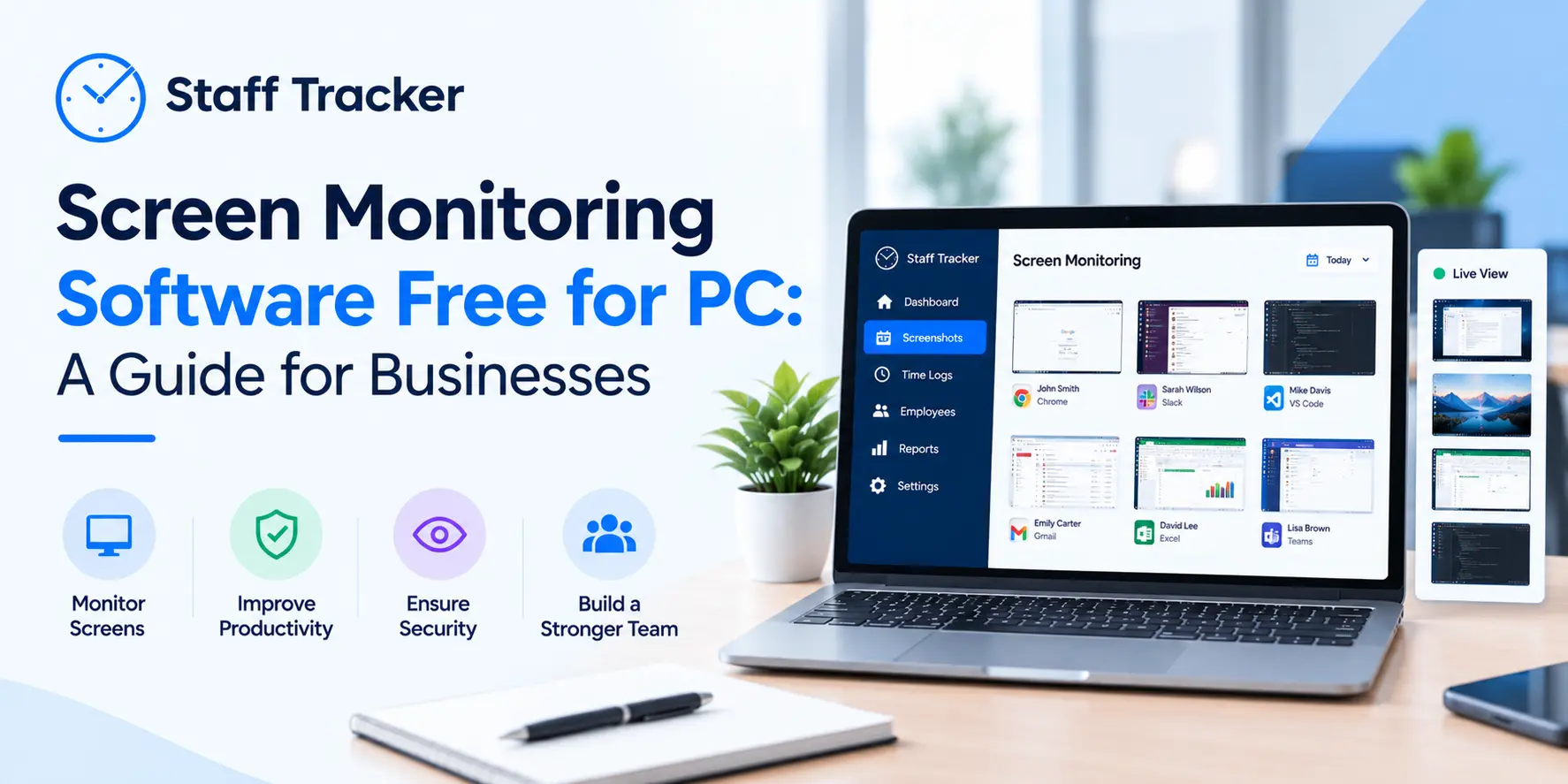
Statistics do not necessarily reveal the whole picture. The visual context can be required frequently to know how the employees were engaging with their work. The screenshot monitoring of Staff Tracker gives managers a more in-depth understanding of the work patterns as the screenshot feature gives periodic visual representations of worker activity.
Screenshot monitoring is one of the solutions that are used in real time performance management to close the gap between data and real work execution. Managers are able to know whether the employees are working on productive tasks, learning new tools, or experiencing difficulties in the workflow.
In engagement sense, screen shots are favorable to positive feedback instead of conjecture. Visual insights allow managers to direct training, clarify expectations, or streamline work processes all of which help create a more supportive and transparent work culture.
Desktop Activity and Application Monitoring for Workflow Optimization
It is important to know the applications and tools used by employees on a day-to-day basis to optimize performance. PC Tracker by Staff Tracker is used to monitor desktop activity and application use in real-time and assists managers to track productivity patterns and bottlenecks.
This feature enhances the real time performance management as it discloses the effects of digital tools on efficiency. In case the employees use a lot of time to change applications or non-essential tools, the managers can modify the processes.
To the employees, this knowledge serves to develop workflows that are more aligned. Engagement is bound to improve when systems and tools work in favor of productivity, and not against it.
Supporting Field Teams Through Real-Time Location Visibility
Performance management is not only limited to office settings. Monitoring tools should be considered in accordance with the peculiar conditions of the field teams. The geo tracking option of Staff Tracker enables the managers to locate field employees in real time to provide them with better security, logistics coordination and efficiency in their operations.
Geo tracking is used in the context of real time performance management, so that the activities in the field are seen and synchronized. Managers are also able to realize the patterns of movement and allocate resources in a better manner, and employees have the advantage of being controlled properly without manual check-ins at all times.
This balance helps in facilitating the engagement because it minimizes the uncertainty and enhances communication between the field teams and the management.
Call Monitoring and Communication-Based Performance Evaluation
In teams that deal with customer communication or with heavy coordination work, one of the significant components of everyday work is calls. The call tracking option of the Staff Tracker makes the call duration, the call logs and call analysis available.
These insights are crucial to real time performance management with a manager being able to assess communication workload and time and activity data. Actually, instead of working on assumptions to measure performance, managers may consider actual call records to gain knowledge on effort and engagement.
The employees also enjoy better clarity of expectations and fair assessment which enhances trust and motivation.
Attendance and Workday Structure as Engagement Drivers
Stability and order are crucial to the continuation of engagement. The attendance tracking option of Staff Tracker also makes it simple to manage staff attendance by tracking it automatically, requesting leaves, and reporting absences in real time.
The visibility of attendance assists in real time performance management, as it makes sure that the working schedules are adhered to and fairly checked. The managers are able to see the picture of availability, and employees get a clear understanding of the process of attendance.
This arrangement inhibits friction and it helps in making the workplace predictable and interesting.
Browsing and Application History for Policy Alignment
Having alignment with the organizational policies is a significant factor in performance management. Staff Tracker makes it possible to track the browsing and application history to ensure that the staff members act according to the instructions of the company.
Policy alignment assists in establishing coherence in expectations within teams in the real-time framework of performance management. It also gives employees insight into the patterns of acceptable usage and managers are in a position to proactively deal with issues and not reactively.
This will facilitate the engagement through promoting fairness, and consistency as opposed to punitive control.
Distance Tracking and Operational Transparency
In the case of mobile teams, it is important to know the distance covered and the path followed in order to evaluate performances and expenditures. The distance tracking method of Staff Tracker allows seeing the movement of the staff, contributes to logistics planning and reporting.
The distance data in real time performance management, is another element of transparency, and field efforts will be properly reflected. Workers will feel appreciated, and managers will have the opportunity to receive information on the efficiency of their work based on the data.
Simple Implementation That Encourages Adoption
The performance management tools can work only in case they are simple to use. Staff Tracker is made to track the employees easily through three easy steps, which include registering, downloading the app, and monitoring employees.
This ease guarantees that the real time performance management can achieve its implementation without the complexity of technicalities or the efforts of the long onboarding process. Simple adoption assists teams in the area of productivity as opposed to managing the system and aids in the process of engagement and performance.
Aligning Performance Management With Employee Empowerment
Performance management can never be a control project, but rather empowerment. When employees are aware of what they are expected to do, they are given feedback on time and they are working in organised systems, chances are high that they will remain engaged.
The Staff Tracker allows managers to shift their focus to response to proactive management. The platform aids organizations to create performance management systems that are transparent, fair and growth oriented by offering real-time feedback on productivity patterns and workflow patterns.
This congruency means that real-time performance management will be an instrument of continuous enhancement and not monitoring.
The Bottom Line
In contemporary organisations, the performance management should not lag behind the real-life working experience. Late reviews and partial information can no longer be conducive to productivity and engagement. Real time performance management is more responsive, transparent and effective.
Staff Tracker has extensive features like time tracking, screenshot monitoring, desktop activity tracking, geo tracking, call logs, attendance management and browsing history which make Staff Tracker the tools managers require to use to put real time performance management in place. Through transforming real-time data into an actionable item, companies will be able to streamline their working processes and build a workplace in which they feel encouraged and assessed with fairness.
Once performance management is ongoing, transparent and has data, then engagement becomes a natural consequence- and teams become enabled to do more things collectively.
 07-10-2026