- By Admin
- 24 Apr, 2026
- 2485 Reading
Effective management of remote teams needs the appropriate systems and tools that will create clarity and not interfere with the working processes. Here is where employee productivity tracking tools are needed. To gain insight into the performance, streamline operations and hold accountability among distributed teams, businesses today depend on structured tracking systems.
In remote work settings, managers will not be able to use physical presence to gauge productivity. Rather, applications such as Staff Tracker can give organizations real-time information about what employees are doing to enable the organization to monitor work patterns and enhance efficiency. These tools are not aimed at regulating employees but aimed at establishing transparency and simplification of operations.
Remote team productivity software enables the company to track the time spent, locate bottlenecks, and keep staff focused on the organizational objectives.
Why Remote Teams Need Productivity Tracking Tools
Remote teams work in various places, time zones and timetables. Although this flexibility enhances the work-life balance, it brings drawbacks in terms of performance tracking and regulating the workflows.
This gap can be addressed by using employee productivity tracking tools, which will give precise information on how the employees are spending their time. Time tracking, application monitoring, and activity logs are some of the features provided by Staff Tracker that enable managers to obtain a clear picture of work patterns.
These tools remove the guesses and offer data-based insights. Managers are able to assess performance with actual performance records, rather than making assumptions. This enhances decision making and makes sure that teams are productive.
Workforce tracking tools enable businesses to develop a uniform management strategy when working with remote and hybrid teams.
Key Features of Employee Productivity Tracking Tools
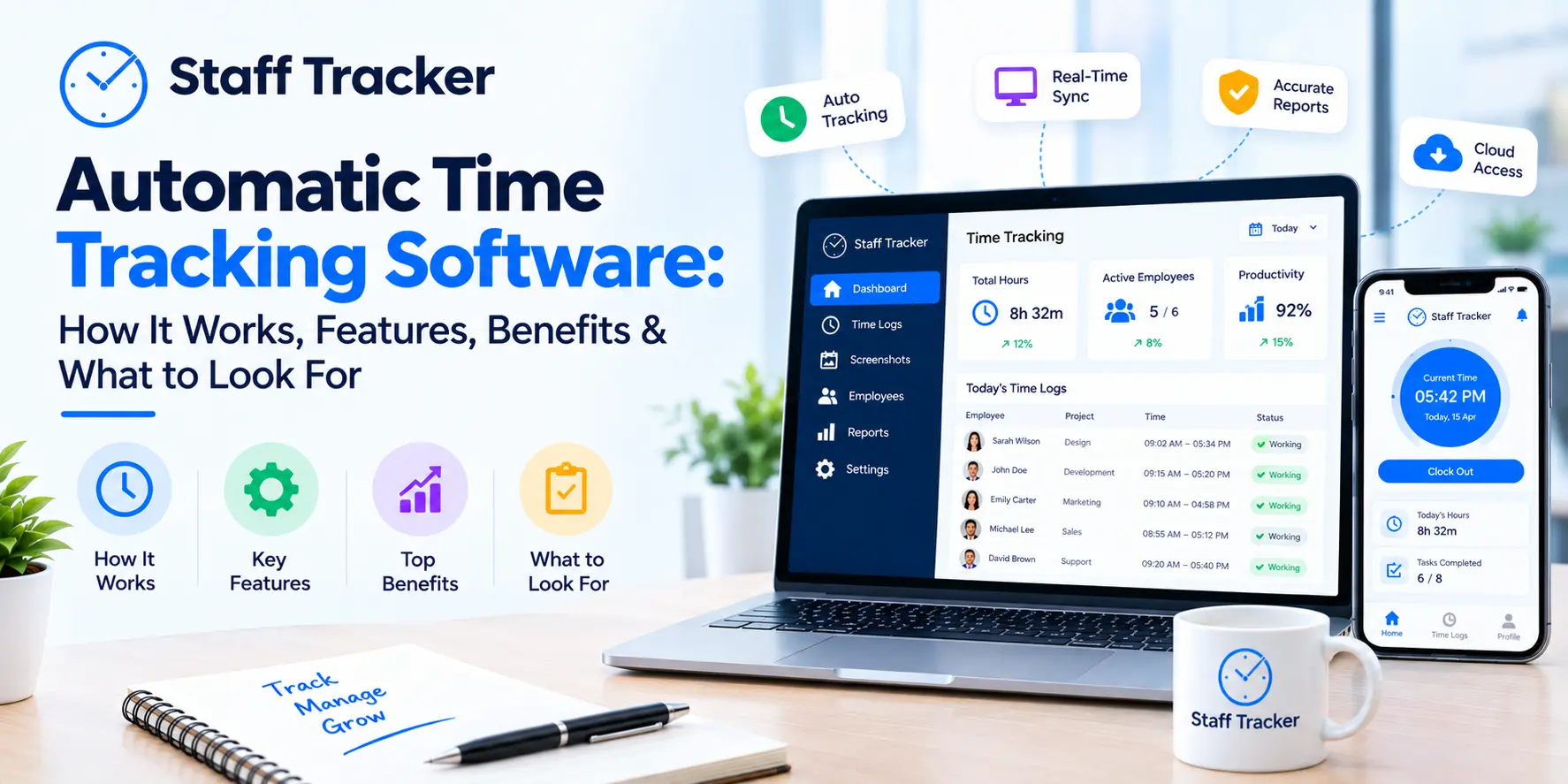
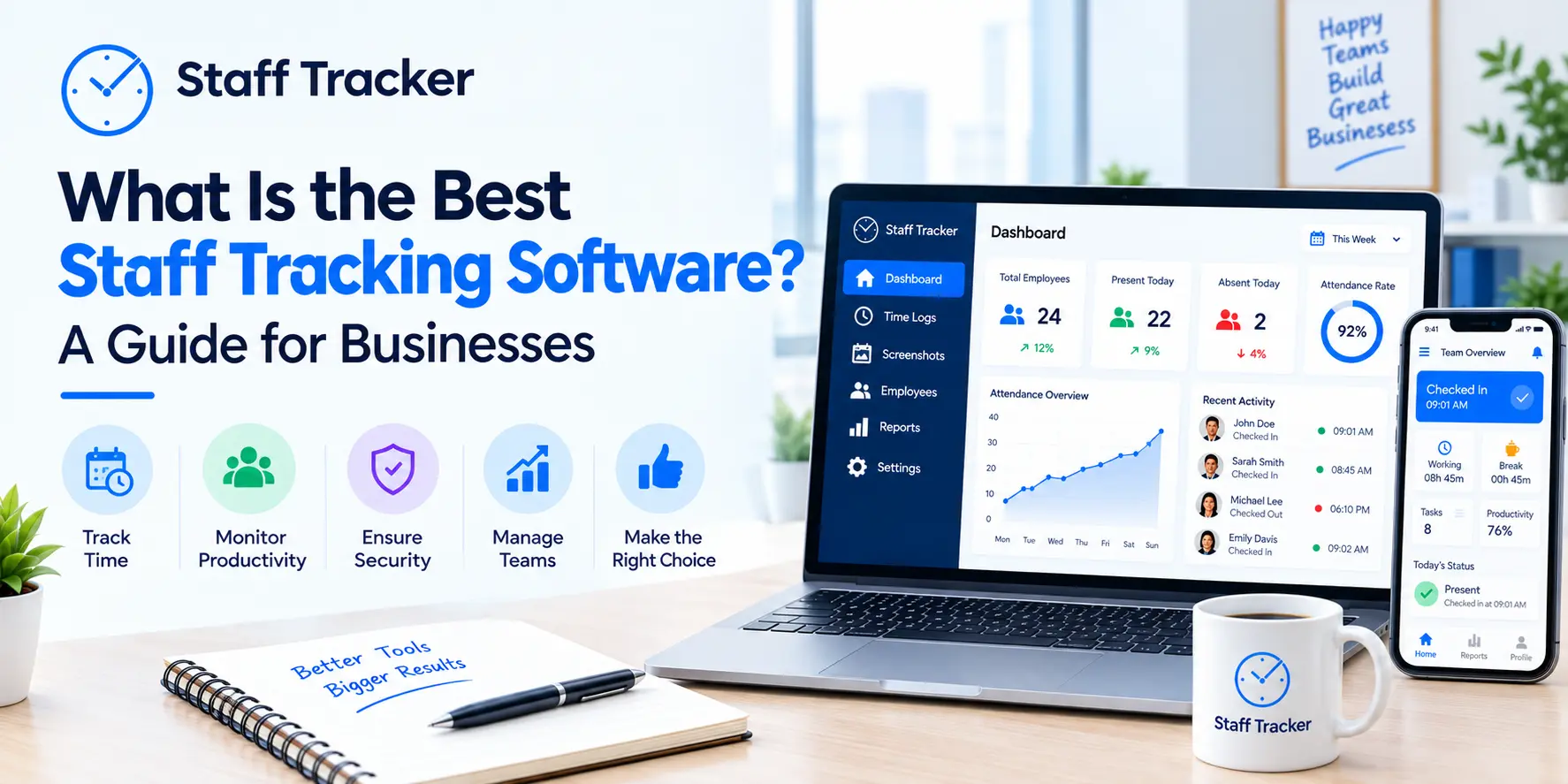
Modern employee productivity tracking tools are built in such a way that they give an in-depth understanding of employee activity. Staff Tracker integrates various functions in a single platform to aid productivity tracking.
Another feature of great importance is time tracking. It enables companies to track the working hours, project deadlines, and duration of the tasks. This assists managers to know how time is allocated in various tasks.
Screenshot monitoring is a visual representation of work activity by employees. Regular screenshots assist the managers to study workflow and understand where to make it better.
The history track of browsing and application facilitate businesses to know how employees utilize their systems at their workplaces. This makes certain that employees are kept concentrated on work.
Call logs and tracking are valuable to businesses as they offer extensive information on communication which can be used to ensure quality and enhance customer relations.
Field team members can find geo tracking and distance tracking features especially helpful. These have the ability of enabling companies to monitor in-time the location and movement of employees.
All these features combined make Staff Tracker a full-fledged remote monitoring software solution to contemporary teams.
How Productivity Tracking Tools Improve Performance
The overall aim of employee productivity monitoring tools is to enhance performance without causing undue stress. Staff Tracker does this by giving practical information on the activity of the staff.
Managers are able to determine which jobs are consuming the highest time and areas of inefficiency. This enables the businesses to streamline work and enhance efficiency. The tracking tools are also useful in determining training needs so that employees get the training they need to do an improved job.
Businesses are able to use productivity analytics to study trends and patterns over a period of time. This aids in accurate decision-making on resource allocation and project management.
Such insights empower organizations to shift away in a reactive management approach towards proactive improvement.
Supporting Accountability Without Micromanagement
Micromanagement is one of the most significant issues of tracking tools. Modern employee productivity tracking tools are however, made in such a way that they foster accountability and not control.
Staff Tracker offers automatic tracking of work hours, activities and tasks. The employees know that they are being monitored at work and this promotes discipline and responsibility.
Simultaneously, managers should not have to monitor employees all the time. Rather, they are able to depend on data supplied by the system.
This balance will provide a more healthy working environment with employees being able to concentrate on their work and still be accountable.
Enhancing Workflow and Team Management
Without the appropriate systems in place, managing workflows in remote teams may be a challenge. Work may be slowed down and co-ordination may be problematic.
Employee productivity tracking tools are useful in optimizing work processes as they offer a centralized system to monitor work. Staff Tracker is a combination of time tracking, activity monitoring and reporting.
This enables managers to determine bottlenecks and make sure that projects are on time. Team management tools enable business to enhance coordination, consistency within teams.
Having a clearer insight into the work processes, organizations can distribute their resources more efficiently and have their operations running smoothly.
Role of Remote Monitoring Software in Decision-Making
Remote teams should make decisions using facts and not guesses. Remote monitoring software supplies the knowledge that can be utilized to make sound decisions.
Staff Tracker provides a comprehensive report of employee activity, which includes the use of time, the activity of the applications, and the call history. Such reports assist managers to know the trend of performance and where improvements can be made.
With performance tracking software, businesses are able to judge employee efforts in an objective manner. This minimizes bias and makes sure that decisions are made on real data.
The efficiency of decision-making is enhanced by the use of data as decisions are made better according to the organizations.
Improving Communication Through Data Insights
Effective communication is essential for remote teams. Nevertheless, the absence of data communication can be confusing and inefficient.
Employee productivity tracking tools enhance communication as they inform about the activity of employees in real time. This data can help managers engage in meaningful discussions that are solution-oriented, as opposed to problem-oriented discussions.
The reporting capabilities of Staff Tracker can give managers detailed information concerning work patterns to help prevent problems.
This minimizes the necessity of regular follow-ups and gives a more organized process of communication.
Scalability and Ease of Use
Scalability of modern employee productivity tracking tools is one of their most important benefits. Tracking needs of businesses start to become more complex as the business expands.
Staff Tracker can be implemented to accommodate both small and large organizations by scaling to the needs of the business. The configuration is easy and requires one to create an account, download the application and commence the monitoring process.
This simplicity allows it to be used by both small and large businesses. Companies can be efficient even during their expansions with the help of workforce tracking tools.
Conclusion
In the current remote work setup, companies require efficient mechanisms to monitor the performance and ensure productivity. Employee productivity tracking tools make the visibility and insights needed to manage the teams.
Staff Tracker is a full-fledged solution that has such features as time tracking, screenshot monitoring, and activity tracking. These tools are valuable in assisting businesses to optimize workflow, increase accountability, and create data-driven decision-making.
With remote team productivity software, organizations are able to establish a structured and efficient work environment without micromanagement of the employees. When approached in the correct manner, productivity tracking will become a growth tool as opposed to being a control tool.
FAQs
1. What are employee productivity tracking tools?
They are computer based programs that assist companies to track employee activity, hours worked and productivity.
2. How do productivity tracking tools improve remote work?
They give instant data about work trends, enabling managers to streamline work processes in order to enhance efficiency.
3. Is Staff Tracker a remote monitoring software?
Yes, it does include functions such as time tracking, screenshots, and monitoring activities of remote teams.
4. Do these tools lead to micromanagement?
No, in the hands of the right person, they bring about accountability and lessen the necessity of close-supervision.
5. Why are productivity analytics important?
They assist companies in learning the trend of performance and make decisions based on data.
ABOUT THE AUTHOR
Content written by Adwrika
Adwrika is part of the expert content marketing team at ZoomIntoWeb. He has an expertise of curating meaningful information that can be used by visitors in general. Adwrika is also involved in creating client-specific stories and blogs.
 21-10-2026