- By Admin
- 21 May, 2026
- 367 Reading
It's not a smooth ride to be a small team. In smaller business environments, all employees may have multiple roles, deadlines may be more compressed, and managers may have to manage the business, clients, and employees simultaneously. This makes even minor delays or productivity problems impact the entire process.
This is one of the reasons why businesses are today employing employee time tracking tools.
The benefits of employee time tracking go beyond simply recording work hours. With modern time tracking software, small teams can boost productivity, manage projects more efficiently, cut down on confusion, and establish accountability—without the added stress on employees.
Managers can obtain a clear overview of the progress of the work and do not have to check attendance or ask the employees over and over again for updates.
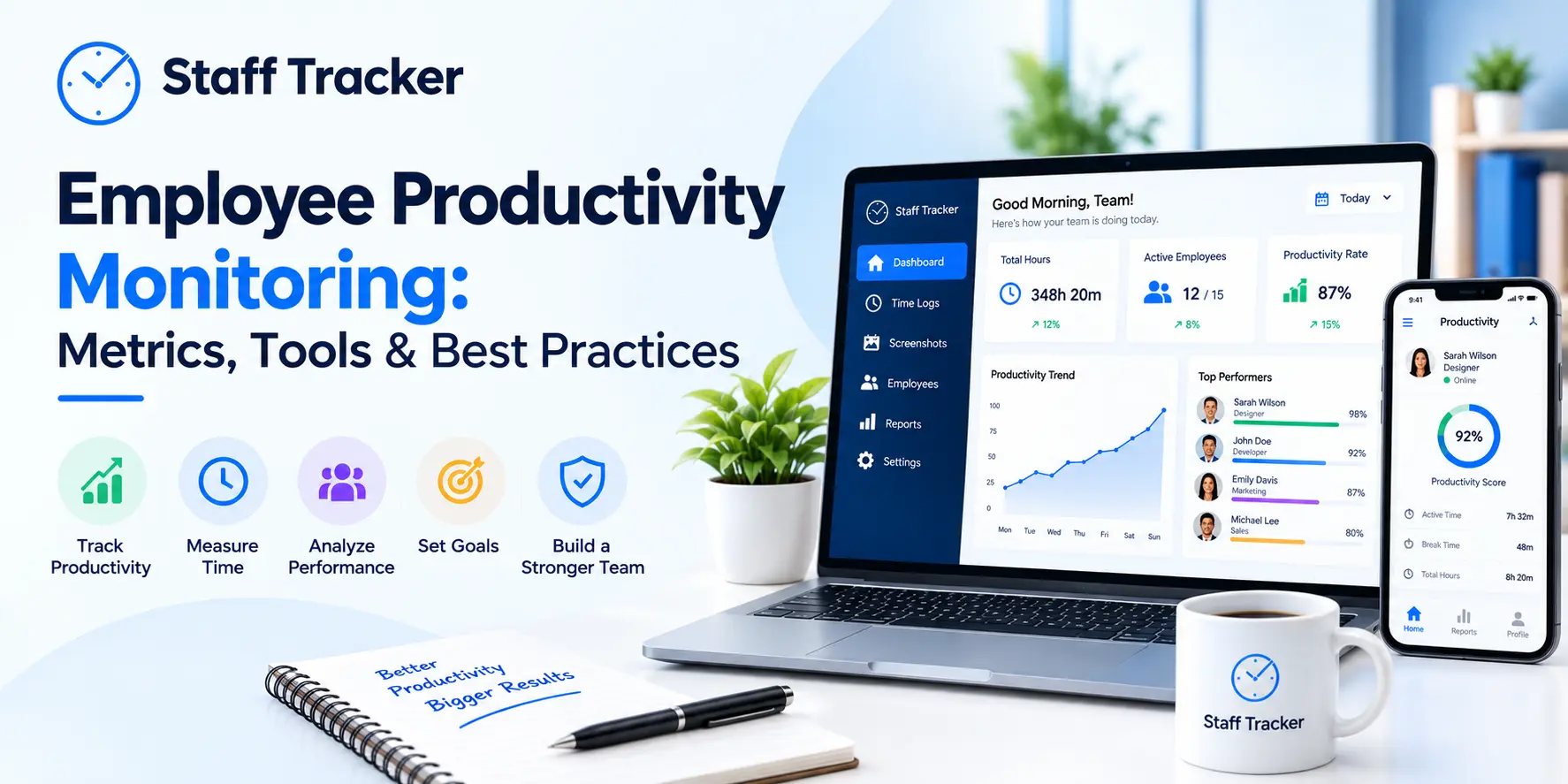
This blog will explain why time tracking has come into play for small businesses, how it can enhance team efficiency, and why more companies are turning to workforce monitoring solutions.
What Is Employee Time Tracking?
Employee time tracking involves tracking the time spent by employees during their workday. Software or digital tools are used to track attendance, hours worked, hours spent on a project, break time, and task progress.
Many companies used to make use of spreadsheets or manual attendance systems previously. However, in today's day and age, automated tools are the preferred choice of businesses because they are more accurate, and they save businesses time as well.
Businesses can track with modern tracking systems.
Employee attendance
Active work hours
Project timelines
Task completion
Productivity patterns
Time spent on specific activities.
This provides increased transparency to the work performed by small teams and enables managers to better coordinate work.
Why Small Teams Need Time Tracking Software
In large companies there are usually distinct HR, operation, and project management departments. However, small businesses may have fewer resources and staff sizes.
Therefore, productivity and deadlines are more critical to be managed.
If not managed properly, businesses can encounter issues such as the following:
Missed deadlines
Uneven workload distribution
Time wastage
Delayed projects
Attendance confusion
Productivity gaps
That's where employee time tracking tools can help. They assist businesses to maintain order while avoiding the development of intricate management systems.
Benefits Of Employee Time Tracking
Businesses are investing in time tracking software today for a variety of reasons. Let's consider some of the most crucial benefits that small teams can enjoy.
Better Team Efficiency
One of the biggest time tracking benefits for small teams is improved efficiency.
Employees can be more focused and more organized when they know how their time is being tracked. Managers can also discover where time is being squandered and where workflow could be enhanced.
Tracking reports, for instance, can be useful if a project is always on schedule for overruns in order to establish the reason behind the delays.
This helps teams to work smarter, rather than harder.
Improved Project Time Management
Most small businessmen perform several jobs simultaneously. If the project isn't done properly, it can be hard to manage.
Employee time tracking software can benefit businesses in the following ways:
Monitor project timelines
Track task progress
Work more efficiently
Avoid deadline delays
This enhances the productivity of the overall project and enables businesses to accomplish work more effectively.
Managers can also use the previous tracking data to more accurately predict future timelines for projects.
Increased Productivity
Businesses use tracking software for productivity improvement, too.
The employee productivity tracking benefits become visible when businesses can clearly understand the following:
How time is spent during work hours
Which tasks consume the most time
Where workflow interruptions happen
Which processes reduce efficiency
Businesses do not have to guess; instead, they can make decisions based on the data.
This can result in higher productivity without over-burdening employees.
Easier Attendance Tracking
Keeping track of attendance is cumbersome, particularly as teams expand.
Time tracking software automates this process by recording automatically:
Login and logout times
Break duration
Work hours
Shift timings
Absences
This minimizes errors made by hand and allows businesses to keep their attendance records more accurate.
Small businesses that don't have a huge HR staff can benefit from automated attendance tracking, as it saves them a lot of time.
Better Workload Distribution
Small teams: There are sometimes a few employees who are too busy doing other things, and there are some who have lighter workloads.
These time tracking reports enable managers to know:
Which employees are handling more tasks
How long tasks usually take
Whether work is distributed fairly
This can contribute to getting a balanced and healthy workflow throughout the team.
More Accountability And Transparency
Transparency is one of the key advantages of using an employee tracking system.
Communication becomes easier when work hours and task progress are well documented between the workers and managers.
The employees also gain because work is properly documented. This helps to avoid confusion and helps to provide a professional atmosphere for work.
Why Businesses Are Moving Towards Automated Time Tracking

Today, many companies are making the switch from manual tracking methods to automated software systems.
The why is straightforward – Automation saves time and ensures accuracy.
Today's tracking tools can offer:
Automatic attendance reports
Productivity insights
Task monitoring
Project tracking dashboards
This can be advantageous to businesses so that they are able to concentrate more on the growth instead of spending hours managing spreadsheets or manual reports.
Features To Look For In Time Tracking Software
There are some tools that are particularly beneficial for small teams, while others are not necessarily relevant to all businesses.
Real-Time Dashboard
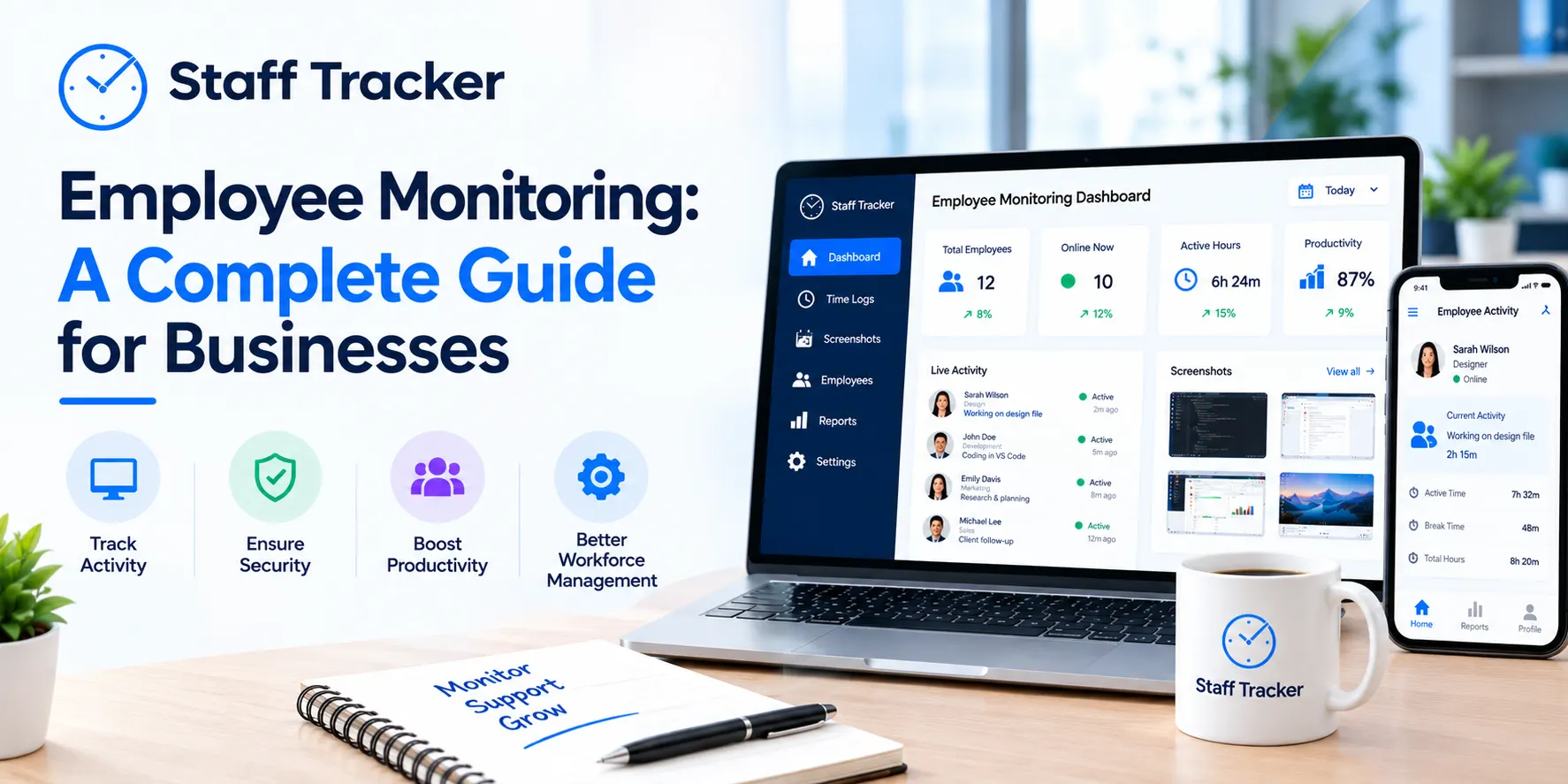
The live dashboard allows managers to check the progress of the work in real-time.
Attendance Tracking
Manual effort is reduced with automated attendance management.
Project Time Monitoring
Helpful in an enterprise that has to work with many projects at the same time.
Productivity Reports
Gives information about workflow and employee performance.
Activity Monitoring
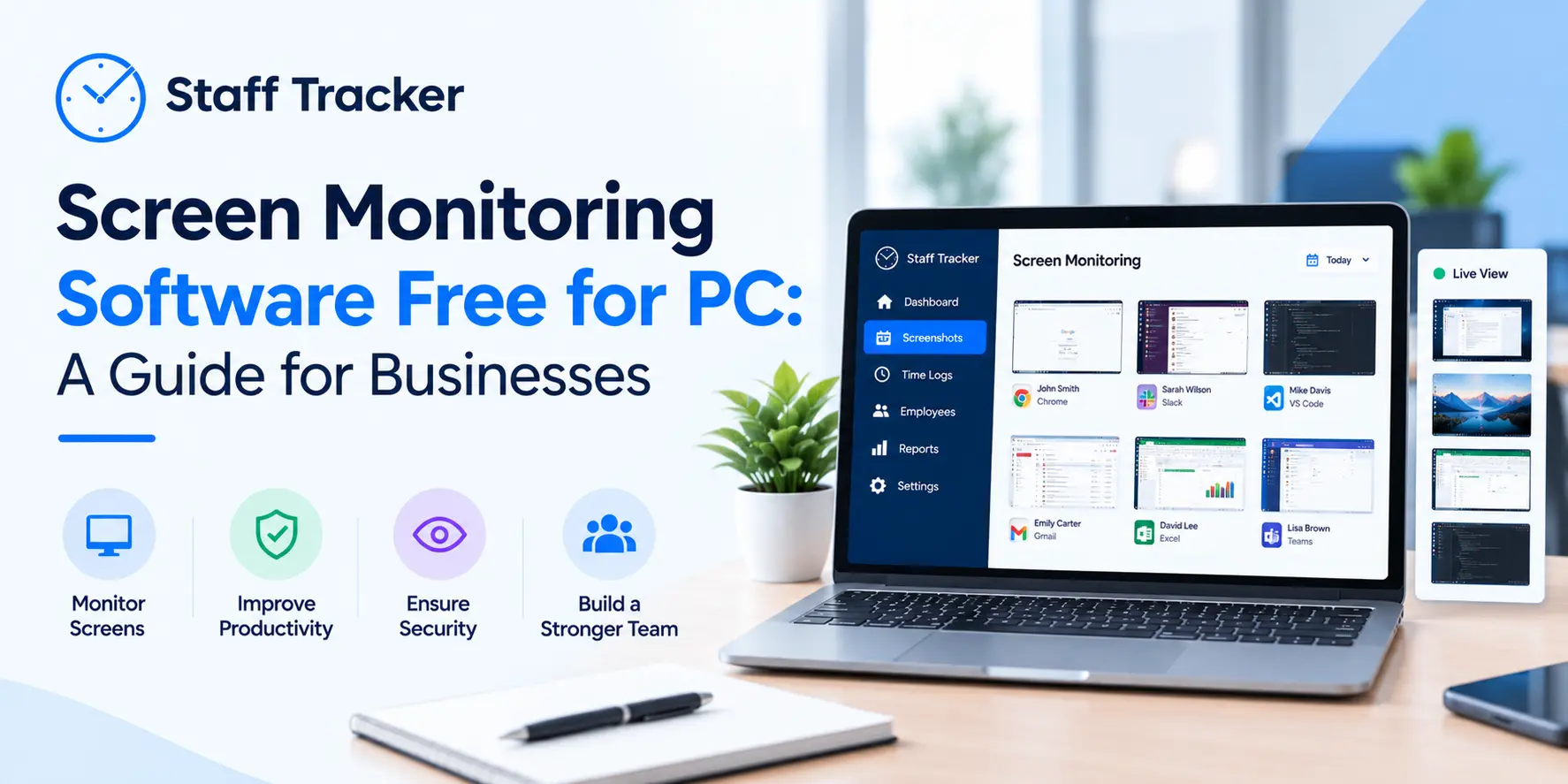
Provides businesses with an understanding of how applications and work are used.
Reporting & Analytics
Detailed reports can be used by managers to make better decisions and plan the workflow.
How Staff Tracker Helps Small Businesses
For companies seeking a straightforward employee monitoring platform, Staff Tracker could be a viable option to consider.
The platform has features to improve the efficiency of managing employee productivity, attendance, and work tracking.
Some handy features are:
Time tracking automation
Attendance monitoring
Productivity tracking
The browser history and browsing habits.
The call log and reports.
Real-time activity monitoring
If you're operating a small team, these features, packaged into a single solution, are much easier to manage.
Staff Tracker enables companies to maintain their business organization and also boost general staff performance and duty.
Common Misconceptions About Time Tracking
There is a misconception that time tracking software is nothing more than a way to closely supervise employees. In fact, the use of these tools is to enhance work flows and avoid confusion in business.
If set up properly, time tracking can be beneficial for employees by:
Reducing unnecessary reporting
Clarifying work expectations
Improving task organization
Creating balanced workloads
Providing improved project planning support
The objective should be to improve productivity, but never to micromanage.
Conclusion
It takes organization, communication, and good management of time to be able to run a small team. Simple workflow problems can impact productivity and project delivery if there are no systems in place.
That's why the benefits of employee time tracking are becoming more relevant for businesses today.
Time tracking software helps businesses function smoother, be it by enhancing team efficiency, attendance monitoring, or project time management or helping them grow in productivity.
A solution such as Staff Tracker can help small teams keep better track of their work and attendance and optimize their daily operations from a single solution.
Employee time tracking will remain a crucial part of workforce management as companies evolve to accommodate a remote and hybrid workforce.
FAQs
What are the benefits of employee time tracking?
Employee time tracking can significantly boost business productivity, attendance, project management, and overall team efficiency.
Why do small teams need time tracking software?
Small teams utilize time tracking software to organize workloads and project timelines and enhance project organization.
Can time tracking improve productivity?
It does help businesses discover their workflow problems, save time, and increase accountability.
Is time tracking software useful for remote teams?
Yes, remote businesses use time tracking software to track employee time, productivity, and task completion.
What features should businesses look for in time tracking software?
Key points are attendance tracking, project monitoring, productivity reports, activity tracking, and analytics.
Also Read: Best Free Employee Time Tracking Software for Small Businesses
Employee Productivity Tracking Tools for Remote Teams
Time Tracking Software for Remote Teams: Improve Productivity & Management
Which Monitoring Software Is Best for Small Remote Teams?
How a Time Tracker with Screenshots Boosts Productivity and Transparency
ABOUT THE AUTHOR
Content written by Saurabh Sharma
Saurabh is part of the expert content marketing team at ZoomIntoWeb. He has expertise in curating meaningful information that can be used by visitors in general. Saurabh is also involved in creating client-specific stories and blogs.
 09-10-2026